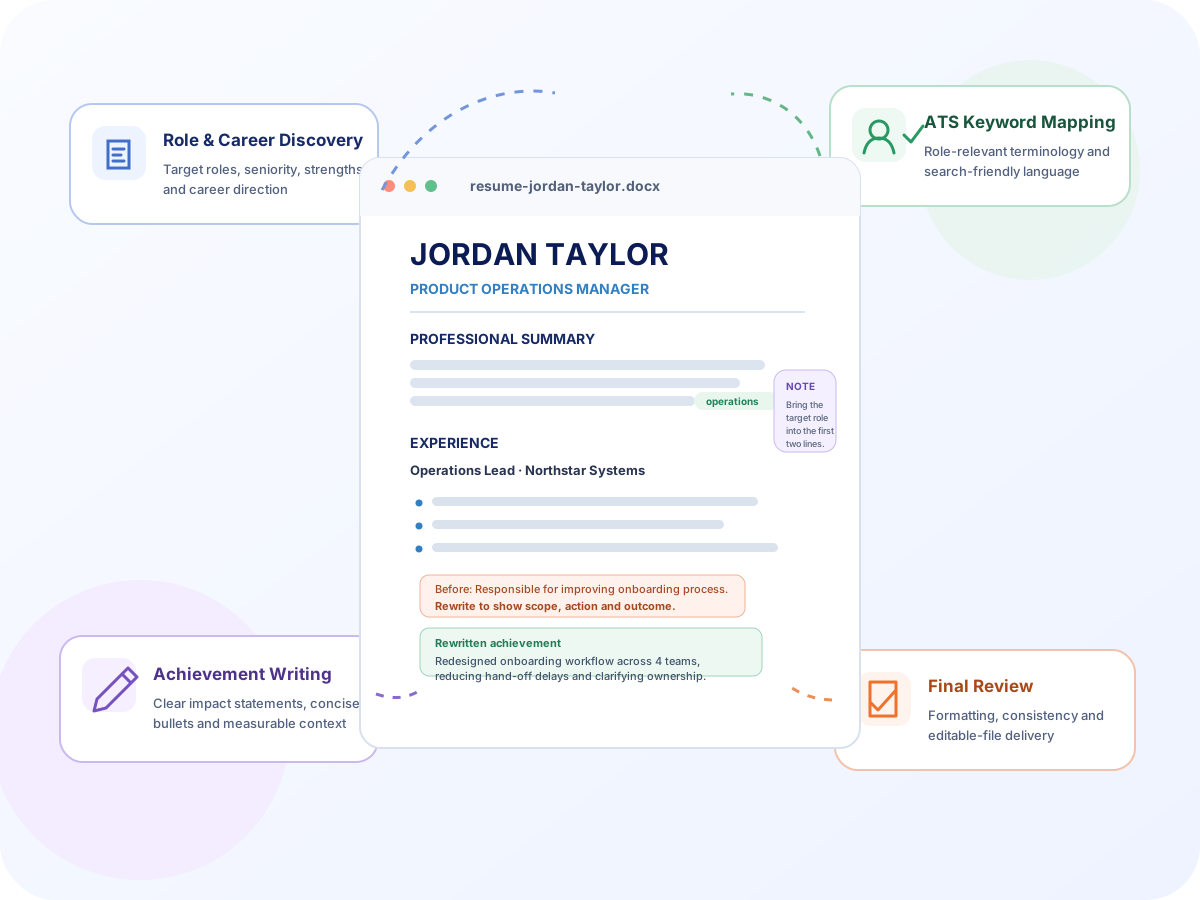
Career Clarity. Stronger Positioning. Professional Applications.
Resume & CV Writing Service for Clearer, Stronger Career Positioning
★★★★★4.8 rating from Researchers, Authors, Students, and Scholars
Role-focused writing. Achievement-led content. Professional career documents.
Turn your experience, strengths, projects, and career goals into a focused resume or CV that is easier for recruiters and hiring teams to understand. We help organize your career story, strengthen accomplishment language, align content with target roles, and prepare polished application documents without inventing facts or overstating experience.
Clarify the target role, career level, and strongest relevant evidence.
Use clear sections and role-relevant terminology without unnatural keyword stuffing.
Turn verified experience and outcomes into concise achievement-focused content.
Check language, consistency, structure, and application readiness before delivery.
Human-Led SupportProfessional judgment applied to the selected service scope.
Scope-Aligned ServiceWork follows the service, requirements, and materials you provide.
Confidential HandlingCareer and application materials are treated as private service information.
Clear DeliverablesReceive the agreed review, edit, writing, or guidance in a usable format.
Delivery PlanningTurnaround is aligned to the selected plan, scope, and stated deadline.
Pricing & Delivery
Resume & CV Writing Plans & Pricing
Plans are based on career depth and document complexity rather than cosmetic template differences. Each resume or CV is written from verified information you supply.
Quick pricing: Contentxprtz resume and CV writing starts from ₹1,500 for an early-career resume up to two pages, with broader plans for mid-career and senior or academic profiles.
Essential
For students, graduates, and early-career professionals who need a clear resume built around one target role or career direction.
₹1,500
resume up to 2 pages
Career-information and target-role review
Professional summary and core section writing
Achievement and skill bullets from supplied evidence
Editable final document plus clean PDF where applicable
Additional pages, multiple target-role versions, cover letters, LinkedIn writing, portfolio content, or urgent deadlines are quoted separately. The service presents verified career information clearly; it does not fabricate experience or guarantee interviews.
Ready to move forward?Start with Resume & CV Writing Service when you are ready.
Choose the document support that matches your career stage and application context. Scope is based on the information you provide and the documents you need.
Professional Resume Writing
Role-focused resume writing for experienced professionals who need clearer positioning, stronger achievements and a polished structure.
If you already have a strong draft, we can improve clarity, emphasis, consistency and presentation rather than rebuilding the document from the beginning.
The service is built around clear career-document outputs. The examples below illustrate the type of writing improvement that can be made without inventing facts or claiming outcomes you did not achieve.
Resume Writing Examples
Achievement Writing
From duty to impact
Responsible for coordinating onboarding activities for new employees.
Coordinated cross-functional onboarding activities, clarified ownership across stakeholders, and improved hand-off consistency for new joiners.
The rewrite makes the action and scope clearer without inventing a metric.
Career Positioning
From generic to targeted
Experienced professional looking for a challenging role in operations.
Operations professional with experience coordinating process improvement, stakeholder communication and cross-functional delivery across fast-moving teams.
The summary focuses on relevant strengths instead of using a generic objective.
Concise Writing
From task list to readable evidence
Worked with customers, updated reports, managed emails, followed up with teams and supported daily operations.
Supported daily operations by coordinating customer communication, maintaining reports and following up with internal teams on open actions.
The revision groups related work and improves readability while preserving the underlying facts.
3
Why Choose This Resume & CV Writing Approach
A strong career document should be easy to understand, credible, targeted and useful to the applicant. The writing process focuses on those priorities rather than unsupported claims or decorative formatting.
Built around your real career story We organize genuine experience, projects, skills and achievements instead of inventing content.
Role-focused information hierarchy The most relevant content is easier to find and understand.
Readable professional presentation Clear sections and conventional formatting support practical use.
Achievement-led writing Responsibilities are strengthened with scope, action and outcome context where supported by your information.
Ethical, fact-preserving support No fabricated job titles, qualifications, metrics, employers or achievements.
Revision-friendly process Your corrections, missing context and target-role priorities can be incorporated before finalization.
DiscoverUnderstand your direction
PositionChoose what matters most
WriteBuild clear career content
RefineCheck facts and emphasis
DeliverPrepare editable final files
1We understand your target roles and application context.
2We identify the strongest evidence from your career history.
3We write and structure the document around relevance and clarity.
4You review factual accuracy and provide any missing context.
5The final document is polished for practical application use.
Ready to move forward?Start with Resume & CV Writing Service when you are ready.
Practical answers about scope, ATS considerations, document types, revisions, factual accuracy, deadlines and career-document use.
What is included in the Resume & CV Writing Service?+
The service can cover career-positioning discovery, document structure, professional summary writing, achievement-focused experience bullets, role-relevant keyword integration, formatting, and revision support based on the agreed scope.
Can you write both a resume and a CV?+
Yes. The document type should match the target market, career stage, and application context. A concise resume is often role-focused, while a CV may require a fuller academic, research, teaching, publication, or professional history.
Do you make resumes ATS-friendly?+
The writing and structure can be prepared with applicant-tracking readability in mind, including clear headings, straightforward formatting, and role-relevant terminology. No resume can guarantee an ATS score, ranking, interview, or job outcome.
What information do you need from me?+
Useful inputs include your current resume or CV, target roles, job descriptions, employment history, education, skills, certifications, notable projects, achievements, and any career changes or gaps that need careful positioning.
Can you help if I am changing careers?+
Yes. Career-change resumes can emphasize transferable skills, relevant achievements, selected projects, and a clear professional narrative while avoiding unsupported claims or overstating experience.
Can you write an executive resume or leadership CV?+
Yes. Executive-level documents can focus on leadership scope, business impact, transformation, team responsibility, strategic initiatives, and selected achievements relevant to the target role.
Can cover letters and LinkedIn profiles be included?+
They can be included when requested. The scope can be tailored to the application documents you need, such as a resume or CV, cover letter, LinkedIn profile copy, or an executive bio.
Will you invent achievements or job responsibilities?+
No. Strong resume writing should clarify, organize, and strengthen the presentation of real experience. Unsupported employers, job titles, metrics, qualifications, responsibilities, or achievements should not be fabricated.
How are revisions handled?+
Revisions are used to clarify facts, refine emphasis, and improve alignment with the agreed target. Feedback is most useful when it identifies factual corrections, missing context, target-role priorities, or wording preferences.
How long will my resume or CV take?+
Turnaround depends on the document set, career complexity, information provided, revision needs, and deadline. Share your required delivery date in the enquiry so feasibility can be confirmed before work begins.
Do you guarantee interviews or job offers?+
No. A professionally written resume can improve clarity, positioning, and application readiness, but interviews and hiring decisions depend on factors outside the document itself, including experience, role fit, competition, screening criteria, and employer decisions.
Is my career information kept confidential?+
Career documents and personal information should be handled as confidential service information through the designated submission, review, and delivery process.
Ready to move forward?Start with Resume & CV Writing Service when you are ready.
Share your target role, career level, current document status, required application documents and deadline. This helps define the writing scope without making assumptions about your experience.
1
Target role & career level
Include the job title, function, seniority and industry you are targeting.
2
Current resume or CV status
Tell us whether you have an existing draft or need a new document built from your information.
3
Documents required
Resume, CV, cover letter, LinkedIn profile, executive bio or a combination.
4
Deadline & application context
Share the delivery date and any specific job descriptions or application requirements.
Career Document Request
Request a Resume & CV Writing Assessment
Provide enough detail for the writing scope and deadline to be reviewed. You can share the current resume/CV and target job description after initial contact if preferred.