
Professional Recommendation Writing Support

Letter of Recommendation Writing Service for Credible, Specific, Persuasive Endorsements

Turn verified recommender input, candidate evidence, and opportunity requirements into a clear recommendation-letter draft. The focus is on specificity, authentic voice, relevant examples, professional tone, and factual consistency—without inventing achievements or endorsements.

  • Recommender relationship and credibility established clearly
  • Specific strengths supported with supplied evidence and examples
  • Language and structure aligned to the target audience and opportunity
  • Final draft prepared for the recommender’s own review and approval
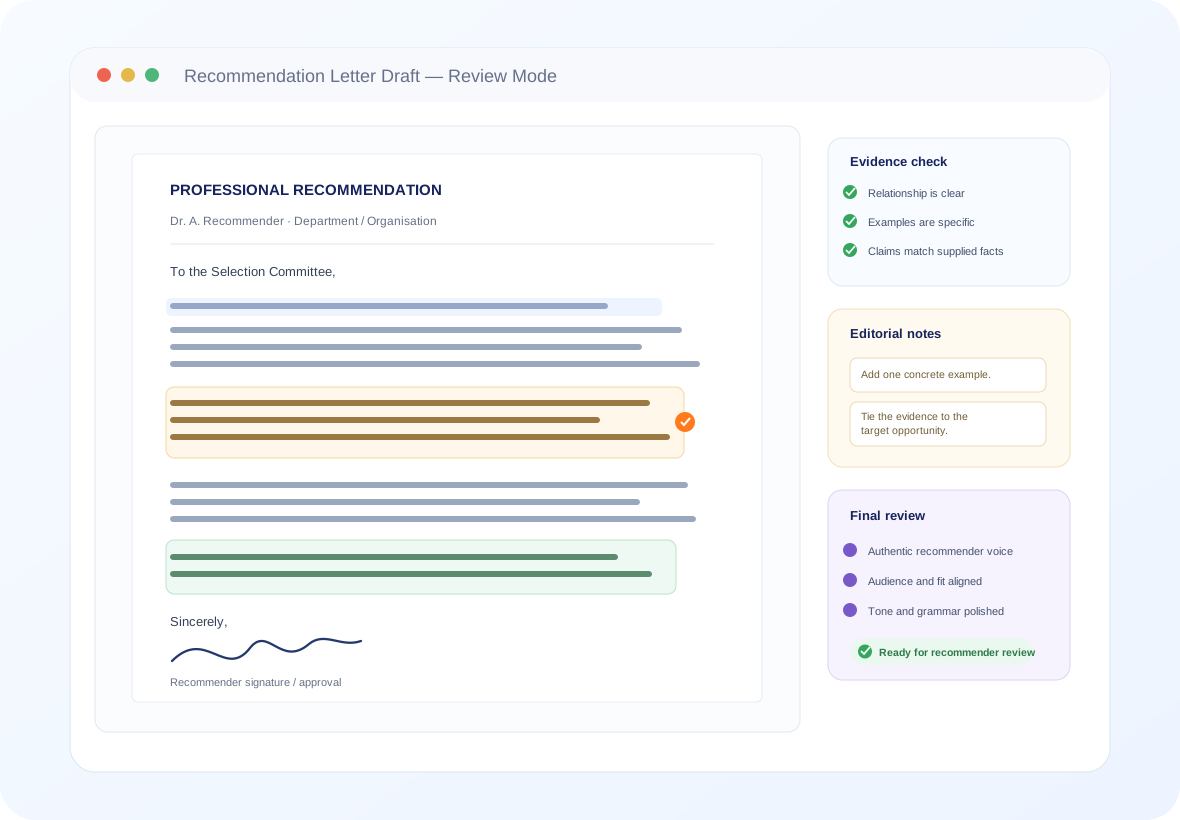
Recommendation letter draft with evidence checks, editorial notes, and recommender review indicators
Visual focus: a realistic recommendation-letter draft with evidence checks, editorial notes, and final recommender review—not a generic stock image.

Why it matters

Clear Relationship Context

Shows who the recommender is and how they know the candidate.

Evidence Over Adjectives

Turns broad praise into concrete observations and examples.

Stronger Audience Fit

Connects relevant qualities to the programme, scholarship, role, or opportunity.

Professional Final Review

Checks clarity, tone, consistency, formatting, and factual alignment.

1

Choose the Right Recommendation Strategy

Start with the recommender–candidate relationship, the selection audience, and the evidence that can be supported. A strong letter is not just positive; it is credible, specific, and relevant.

Is the letter aligned with the opportunity?

Build the recommendation around four questions: who is recommending, what they have directly observed, which qualities matter most, and why those qualities are relevant to the target opportunity.

Academic / GraduateResearch, learning, intellectual ability, initiative, discipline, and academic readiness where supported.
Scholarship / FellowshipContribution, potential, leadership, service, resilience, or impact where supported by examples.
Professional / EmploymentPerformance, responsibility, collaboration, judgment, communication, and role-relevant strengths.
Internship / Early CareerLearning agility, initiative, reliability, projects, teamwork, and growth potential where evidenced.
2

Recommendation Letter Writing Workflow

Move from verified inputs to a focused draft, then review the recommendation for evidence, voice, ethics, presentation, and final recommender approval.

Recommender Context

Role, relationship, duration, and direct basis for evaluation.

Evidence & Examples

Projects, outcomes, behaviour, observations, and concrete moments.

Strengths & Growth

Qualities supported by facts, not unsupported superlatives.

Opportunity Fit

Relevant selection criteria, programme goals, or role requirements.

Polish the Recommendation

Use the draft as a structured evidence document, then verify each layer before it is ready for recommender review.

  • Relationship and recommender perspective are established early.
  • Every important strength is supported by a supplied example.
  • Paragraphs progress logically from context to evidence to endorsement.
  • The tone is professional and consistent with the recommender’s role.
  • The letter is tailored to the opportunity without unsupported claims.
  • Grammar, repetition, formatting, names, titles, and dates are checked.
CheckStatusAction
Relationship clearYesKeep concise
Evidence specificYesLink to strength
Claims verifiedYesCross-check inputs
Audience alignedYesMatch criteria
Recommender approvedReviewFinal author check

Authentic Voice

Language should match the recommender’s role, familiarity, and perspective.

Evidence Accuracy

Names, dates, roles, achievements, and examples should match supplied facts.

Ethics & Integrity

No invented endorsements, hidden conflicts, or misleading relationship claims.

Final Proofread

Check formatting, grammar, signatures, contact details, and submission readiness.

3

What Decision-Makers Expect

1
Credible RelationshipClear basis for the recommender’s judgment.
2
Specific EvidenceExamples that make the praise believable.
3
Relevant StrengthsQualities connected to the opportunity.
4
Comparative ContextContext only when the recommender can support it.
5
Authentic VoiceProfessional language consistent with the recommender.
6
Clear EndorsementA direct, proportionate closing recommendation.
4

Recommendation Quality Checklist

  • Candidate and recommender names are accurate.
  • Relationship and context are stated clearly.
  • The opening identifies the purpose of the recommendation.
  • Important strengths are supported with evidence.
  • Examples are relevant to the target opportunity.
  • Tone sounds credible rather than exaggerated.
  • Paragraphs are concise, coherent, and non-repetitive.
  • Closing endorsement is clear and proportionate.
  • Formatting, contact details, date, and signature are checked.
  • The recommender has reviewed the final draft.
5

Common Reasons a Recommendation Falls Flat

  • Generic praise without examples.
  • Unclear recommender–candidate relationship.
  • Claims that cannot be supported.
  • Copy-pasted template language.
  • Too much biography and too little evaluation.
  • Strengths unrelated to the target opportunity.
  • Overstatement that reduces credibility.
  • Inconsistent names, titles, dates, or details.
  • Weak or ambiguous final endorsement.
  • Ignoring submission or confidentiality instructions.
6

Ethical & Authenticity Check

AspectWhat to DoWhy It Matters
Factual AccuracyUse verified names, roles, dates, achievements, and examples.Protects credibility and avoids misleading claims.
Recommender VoiceKeep the wording consistent with the recommender’s role and actual familiarity.Makes the endorsement believable and coherent.
No FabricationDo not invent relationships, results, awards, rankings, or observations.Preserves integrity of the recommendation.
Recommender ApprovalThe recommender should review and approve the final letter.The letter must reflect the recommender’s genuine judgment.
ConfidentialityFollow the receiving organisation’s instructions for confidential letters.Respects submission rules and recommender privacy.
7

Institution- or Employer-Specific Requirements

RequirementDetails to Confirm
AudienceUniversity, programme, scholarship committee, employer, fellowship, or other recipient.
Prompt / CriteriaAny questions, competencies, values, or evaluation criteria the letter should address.
Length / FormatPage, word, file-format, letterhead, signature, or contact-detail requirements.
Submission MethodPortal upload, email, sealed/confidential submission, or direct recommender submission.
DeadlineExact date, time, time zone, and whether recommender submission is separate.
Naming ConsistencyCandidate name, programme or role title, institution, recommender designation, and dates.
8

Pre-Submission Pack

Before the recommendation is submitted, confirm that the letter and supporting information are complete, consistent, and ready for the recommender’s final action.

  • Final recommendation letter
  • Correct recipient or programme name
  • Recommender designation and contact details
  • Date and required salutation
  • Verified examples and achievements
  • Required letterhead or signature
  • File name and document format
  • Any prompt or evaluation criteria addressed
  • Confidentiality instructions checked
  • Submission route confirmed
  • Deadline and time zone confirmed
  • Recommender final approval complete
9

Recommendation Writing Process — Step by Step

A practical six-stage workflow keeps the recommendation grounded in real evidence and gives the recommender clear control over the final wording.

01

Share the Brief

Provide the target opportunity, requirements, deadline, and submission method.

02

Provide Inputs

Share recommender relationship details, candidate strengths, examples, and verified facts.

03

Structure the Letter

Organise context, evidence, fit, comparative observations, and endorsement.

04

Draft & Polish

Develop clear paragraphs, transitions, professional tone, and concise language.

05

Review Accuracy

Cross-check claims, names, titles, dates, examples, and audience requirements.

06

Recommender Approval

Final wording is reviewed and approved by the recommender before submission.

10

After the Draft

  • Ask the recommender to read the full letter in their own voice.
  • Correct any fact, title, date, relationship detail, or example that needs adjustment.
  • Remove language the recommender would not naturally use.
  • Confirm the final endorsement matches the recommender’s actual judgment.
  • Check the recipient, submission route, and deadline before sending.
11

Tips for a Strong Recommendation

  • Lead with the recommender’s relationship and basis for evaluation.
  • Use one or two strong examples instead of a long list of adjectives.
  • Show what the candidate did, how they did it, and why it mattered.
  • Connect evidence to the qualities valued by the target opportunity.
  • Keep praise proportionate, specific, and credible.
  • End with a clear recommendation and appropriate availability for follow-up.
12

Key Materials to Gather

Candidate CV / Resume

Use as factual background; do not simply repeat it.

Programme / Role Brief

Selection criteria, prompt, competencies, or opportunity description.

Verified Example Notes

Projects, responsibilities, observations, results, and moments the recommender can confirm.

13. What a Strong Recommendation Should Do

Establish ContextExplain why the recommender is qualified to assess the candidate.
Show EvidenceSupport strengths with concrete, verifiable observations.
Demonstrate FitConnect relevant qualities to the target opportunity.
End ClearlyClose with a direct, credible level of endorsement.

14. Golden Rules

  • Right recommender. Right evidence.
  • Specific examples over generic praise.
  • Authentic voice, not template language.
  • Facts first. No fabricated achievements.
  • Tailor to the audience without exaggeration.
  • Recommender reviews before submission.
15

Final Reminder

A strong recommendation is persuasive because it is credible: the recommender’s relationship is clear, the evidence is specific, and every claim can be supported.

Your Recommendation Deserves a Credible, Specific Draft
Discuss Your Requirement
16

Frequently Asked Questions

Practical answers about recommendation-letter drafting, evidence, authenticity, confidentiality, and final recommender review.

What is a Letter of Recommendation Writing Service?

It is structured drafting and language support for recommendation letters. The work can help organise the recommender’s relationship context, evidence, examples, comparative observations, and fit with the opportunity while keeping the final letter grounded in facts supplied by the recommender or applicant.

Who can use this service?

It can be useful for applicants and recommenders working on academic, scholarship, graduate-school, professional, internship, or employment recommendations. The final letter should always reflect the recommender’s genuine assessment and be reviewed by the recommender before submission.

Can you create achievements or endorsements that were not provided?

No. A credible recommendation should be based on verifiable information. The page is designed around evidence-led drafting and explicitly avoids fabricated achievements, relationships, results, rankings, or endorsements.

What information should I provide before drafting begins?

Useful inputs include the recommender’s role and relationship to the candidate, how long and in what context they know the candidate, the target programme or opportunity, specific strengths, concrete examples, relevant achievements, and any required format or submission instructions.

Can you match the letter to a university, scholarship, employer, or programme?

Yes, the draft can be structured around the audience and the stated selection criteria when those requirements are supplied. The goal is to make the evidence relevant without making unsupported claims.

Will the letter sound like the recommender rather than a generic template?

The workflow is designed to preserve a credible recommender perspective. Voice, relationship context, level of familiarity, and examples should be aligned so the letter reads consistently rather than like a generic endorsement.

Do you support confidential recommendation letters?

The workflow can accommodate confidential handling requirements. Applicants should follow the receiving institution’s or employer’s instructions, especially when the recommendation must be submitted directly by the recommender.

Can you revise an existing recommendation letter draft?

Yes. An existing draft can be reviewed for structure, specificity, evidence, tone, repetition, clarity, audience fit, and consistency. Any changes should preserve the recommender’s intended meaning and factual accuracy.

Can you help with multiple recommendation letters?

Multiple letters can be handled as separate recommendation contexts so each one can reflect a different recommender relationship, evidence base, audience, and purpose. Reusing identical wording across recommenders should be avoided.

What makes a strong recommendation letter?

Strong letters usually establish the recommender’s credibility and relationship to the candidate, provide specific observations, support strengths with examples, show relevant context, and connect the evidence to the opportunity in a clear and professional voice.

Do you guarantee admission, selection, a scholarship, or a job?

No. A recommendation letter is one part of a broader application or selection process, and no responsible writing service can guarantee an outcome.

How is the final draft checked before delivery?

The quality review focuses on factual consistency with supplied inputs, structure, specificity, tone, audience fit, grammar, repetition, formatting, and whether the letter is ready for the recommender’s own review and approval.

17

Discuss Your Letter of Recommendation Requirement

Share the target opportunity, recommender context, candidate evidence, deadline, and any submission instructions. Because no authoritative fixed price or turnaround was supplied for this specific service, the page does not publish unsupported pricing or delivery claims.

What to include in your enquiry

The more specific the inputs, the easier it is to structure a recommendation that is relevant, evidence-led, and consistent with the recommender’s real perspective.

01
Target opportunity

Programme, scholarship, employer, fellowship, internship, or other recipient.

02
Recommender relationship

Role, context, duration, and direct basis for knowing the candidate.

03
Evidence and examples

Projects, behaviour, achievements, observations, outcomes, or responsibilities the recommender can verify.

04
Instructions and deadline

Prompt, length, format, submission method, confidentiality rules, and exact deadline.

Integrity note: Recommendation support should never invent achievements, relationships, results, rankings, or endorsements. The recommender should review and approve the final letter before submission.
Recommendation Writing Enquiry

Request a Recommendation Draft Assessment

Send your contact details and the core recommendation context. Do not include sensitive information that is unnecessary for assessing the request.

Security check *Loading question…

Please share only information relevant to assessing the writing request. The final recommendation should be reviewed and approved by the recommender.