Does a PhD Make You a Doctor? What the Title Really Means
Does a PhD make you a doctor? Yes. A PhD, or Doctor of Philosophy, is a doctoral degree. Once the degree has been formally awarded, its holder may generally use the academic title Dr. That does not mean the person is a medical doctor, and it does not give them the right to practise medicine. The title describes doctoral-level academic attainment; professional practice rights depend on a person's separate qualification, registration, licence, and jurisdiction.
The confusion is understandable because everyday conversation often uses the word doctor as shorthand for a physician. Universities use it more broadly. A physicist with a PhD, an historian with a PhD, and a physician with a medical degree can all be called doctor in appropriate contexts, even though their training, responsibilities, and legal scope of practice are very different.
This guide explains when a PhD graduate can use Dr, how a PhD doctor differs from a medical doctor, what happens before the degree is formally conferred, whether other doctorates count, and how to present your title on a CV, publication, email signature, university profile, conference program, or professional website. It also covers situations where the title could confuse an audience and why local rules should be checked in regulated professions.
Quick Answer: Does a PhD Make You a Doctor?
Yes. If you have been formally awarded a PhD, you have earned a doctorate and can generally use the title Dr. In academic and professional settings, both “Dr Maya Patel” and “Maya Patel, PhD” can be correct, subject to institutional style. The first uses an honorific; the second states the credential.
However, a PhD does not make you a medical doctor. A PhD is normally a research degree built around advanced study and an original scholarly contribution. A medical qualification prepares a person for medicine and, after meeting regulatory requirements, clinical practice. The two can overlap in one person—for example, a physician may also complete a PhD—but neither degree should be treated as interchangeable with the other.
The practical rule is to use the title in a way that is accurate and unlikely to mislead. In a university seminar, a PhD holder using Dr is routine. In a hospital, health advertisement, or patient-facing setting, a non-medical PhD holder should make their field or role clear so that “Dr” is not mistaken for a claim to medical registration.
Key Takeaways
- A PhD is a doctorate, so a person whose PhD has been formally awarded may generally use the title Dr.
- A PhD doctor is not automatically a medical doctor; clinical practice requires the relevant medical qualification and registration.
- “Dr Alex Kim” and “Alex Kim, PhD” are both common forms, but using “Dr Alex Kim, PhD” is usually redundant.
- Submitting or defending a thesis does not always mean the doctorate has been officially awarded; university rules determine the point of conferral.
- Professor is an academic rank or appointment, not a synonym for PhD or doctor.
- Professional doctorates can also be doctoral degrees, but professional rights depend on the profession and jurisdiction.
- In regulated or public-facing contexts, use titles in a way that does not create a false impression about licensure or expertise.
What This Page Covers
- Why a PhD holder is academically a doctor
- The difference between a PhD doctor and a medical doctor
- When to start using Dr after completing a doctorate
- How to write your title on CVs, publications, email signatures, and profiles
- How PhD, MD, EdD, DBA, PsyD, and other doctorates differ
- Common title mistakes made by doctoral candidates and graduates
- When university rules, professional regulation, or local law should be checked
Methodology and Academic Sources
This article uses the ordinary academic meaning of doctorate and distinguishes that meaning from regulated professional practice. It also follows a conservative communication principle: a qualification should be presented exactly, and the title attached to it should not imply a licence or scope of practice the holder does not possess.
Degree names and title customs differ across countries and institutions. Readers should therefore check their awarding university's regulations and the rules of any profession in which they work. For general background, see the Encyclopaedia Britannica overview of the doctorate, the University of Oxford's DPhil information, the University of Cambridge graduation guidance, and relevant national professional regulators for medicine or other licensed fields. Contentxprtz's role, when needed, is limited to ethical academic communication support such as research paper editing, thesis editing, and clarity review; authors and institutions remain responsible for qualifications and title use.
Why a PhD Holder Is Called a Doctor
The short explanation is that doctor is an academic degree title that predates its everyday association with physicians. The word is rooted in the idea of a learned teacher or scholar. Modern universities award doctorates as their highest or among their highest academic degrees. The PhD is one of the best-known research doctorates.
A Doctor of Philosophy does not mean the graduate studied the discipline of philosophy. “Philosophy” in the degree name reflects a historical academic tradition. PhDs are awarded across the sciences, social sciences, humanities, engineering, technology, business, education, health research, and many interdisciplinary fields. A person may therefore be Dr Singh because they earned a PhD in chemistry, linguistics, artificial intelligence, economics, history, or another field.
The degree usually requires advanced study, sustained research, and a substantial thesis or dissertation that demonstrates an original contribution to knowledge. Exact requirements vary. Some systems include coursework and comprehensive examinations; others focus more heavily on supervised research. Many require an oral examination, viva voce, defense, or equivalent assessment. What unites these pathways is that the university ultimately certifies doctoral-level scholarly achievement.
That certification is why the title doctor is legitimate. It does not depend on whether the graduate works at a university. A PhD holder employed in government, consulting, technology, publishing, research and development, finance, or industry still holds the doctorate. Whether they choose to use Dr socially or professionally is largely a matter of convention and context.
PhD Doctor vs Medical Doctor: The Difference That Matters Most
A PhD doctor and a medical doctor share a title but not the same qualification or authority. This distinction matters because the word “doctor” communicates different things in different settings.
| Point | PhD / research doctorate | Medical doctor |
|---|---|---|
| Primary purpose | Advanced research, scholarship, and creation or evaluation of knowledge | Education and training for medical practice, subject to professional licensing |
| Typical final requirement | Original dissertation or thesis, often with an oral examination or defense | Medical degree requirements plus clinical training and regulatory steps that vary by country |
| May use Dr? | Generally yes after formal award of the doctorate | Generally yes according to professional and local conventions |
| Can diagnose or treat patients? | Not because of the PhD alone | Only when properly qualified and licensed or registered for clinical practice |
| Common professional settings | Universities, research institutes, industry R&D, government, consulting, policy, laboratories, publishing | Hospitals, clinics, healthcare systems, medical research, public health, private practice |
| Credential style | Dr Name or Name, PhD | Varies by country and medical qualification; professional registration is important |
The key point is not which doctorate is “more real.” Both can be legitimate qualifications. The issue is what the degree qualifies the person to do. A PhD in neuroscience may make someone an expert researcher in a medical topic without making them a physician. Conversely, a physician may be clinically qualified without holding a PhD. Some people hold both.
This is also why title clarity matters in public communication. A PhD-qualified psychologist, nutrition researcher, biomedical scientist, or health economist may have genuine expertise and correctly use Dr, but should not imply medical registration if they do not hold it. Responsible professional biographies normally state the actual qualification and role.
When Can You Start Calling Yourself Doctor After a PhD?
The safest point is when your university has formally awarded or conferred the degree. The exact administrative moment is not identical everywhere. Submission, viva, defense, acceptance of corrections, final deposit, approval by a graduate school, and formal conferral can occur on different dates.
A doctoral candidate may finish the oral defense and receive an outcome such as pass with minor corrections. That is an important milestone, but some universities still consider the student a candidate until corrections are accepted and the award is formally approved. Others issue an official completion letter before the graduation ceremony and regard the degree as awarded at that stage.
If the timing matters for an email signature, job application, conference profile, grant, immigration record, or employment contract, do not rely on informal assumptions. Check your university's official notification. The terms “completed,” “approved,” “awarded,” “conferred,” and “graduated” can have different administrative meanings.
What to use before formal award
Before the doctorate is awarded, describe your status accurately. Depending on your university, suitable wording may include:
- PhD candidate
- Doctoral candidate
- Doctoral researcher
- PhD researcher
- PhD student
- Thesis submitted, PhD examination pending
Do not add PhD after your name or use Dr solely because you expect to pass. Accurate status protects your credibility and avoids problems when employers, journals, funders, or institutions verify qualifications.
How Should a PhD Holder Write Their Name?
There is no single format that is best everywhere. The most common options are Dr Firstname Lastname and Firstname Lastname, PhD. The choice depends on whether the context emphasizes social or professional address, or the exact credential.
| Context | Usually suitable | Why |
|---|---|---|
| University staff page | Dr Priya Raman | Academic honorifics are common and immediately recognizable |
| Research article author line | Priya Raman | Many journals do not include honorifics in author bylines; affiliations and identifiers carry credentials |
| Conference biography | Priya Raman, PhD | Shows the exact degree without depending on title conventions |
| Email signature | Priya Raman, PhD or Dr Priya Raman | Either can work; follow employer style |
| CV or résumé | Priya Raman, PhD | The credential is explicit and easy to verify against the education section |
| Patient-facing health role without medical registration | Name, PhD plus clear role | Reduces the risk that Dr is interpreted as physician status |
Using Dr Priya Raman, PhD is usually redundant because both elements state doctoral status. It is not necessarily “wrong” in every system, but editorial and professional style often favors one or the other. A useful principle is to display the information your audience actually needs.
What about publications?
Academic journals usually determine author-line format. Many list names without titles such as Dr, Professor, Mr, or Ms. The author's institution, ORCID iD, corresponding-author details, and degree information may appear elsewhere. Follow the journal's author instructions rather than adding an honorific simply because you hold a doctorate.
What about LinkedIn and professional websites?
If the doctorate is relevant to your work, listing PhD after your name can make the credential explicit. On a biography page, state the field as well: “Rina Shah, PhD, is a computational linguist…” communicates more than the title alone. Avoid presenting the doctorate as evidence of expertise in unrelated areas.
Does Every Doctoral Degree Make You a Doctor?
Many earned doctorates support use of the title doctor, but doctoral education is not limited to the PhD. Universities offer research doctorates and professional doctorates with different aims, structures, and naming conventions.
- PhD / DPhil: Research doctorate focused on original scholarly contribution. DPhil is the name used by Oxford and some other universities for a degree equivalent in level and broad purpose to a PhD.
- EdD: Doctor of Education, often designed for advanced professional and applied research in education.
- DBA: Doctor of Business Administration, usually oriented toward advanced business practice and applied research.
- PsyD: Doctor of Psychology, often a professional doctorate in psychology; licensure depends on jurisdictional requirements.
- DNP: Doctor of Nursing Practice, a professional nursing doctorate; scope of practice depends on nursing regulation and licensure.
- MD and equivalent medical degrees: Medical qualifications whose structure and level differ across national education systems.
The title alone does not tell you the holder's professional scope. A useful biography names the degree, field, institution when relevant, and actual role. This is especially important for regulated professions.
Does a PhD Make You a Professor?
No. A PhD is a degree; professor is an academic position or rank. Someone can earn a PhD and never work as a professor. Someone may teach at a university under a title such as lecturer, assistant professor, associate professor, instructor, research fellow, or adjunct, depending on the country and institution.
In some academic systems, “Professor” is reserved for a senior rank. In others, especially in everyday university speech, students may address many instructors as professor. Those conventions do not change the underlying distinction: you earn a PhD from a university, while a professorial title is connected to employment, appointment, rank, or institutional policy.
This matters when writing biographies. “Dr Elena Gomez is Professor of Sociology” communicates two different facts: she holds a doctorate and she occupies a professorial role. “Dr Elena Gomez” alone does not imply she is a professor, and “Professor Elena Gomez” does not by itself tell you which doctorate she holds.
Five Practical Examples of Correct Title Use
Example 1: New PhD graduate applying for industry roles
Arun has received the university's formal award letter for a PhD in machine learning. On his CV he writes “Arun Mehta, PhD” and lists the degree in the education section. In email, he simply uses his name and job title. This is accurate and avoids making the doctorate look like a substitute for professional experience.
Example 2: Candidate who has passed the viva with corrections
Nadia has passed her defense but must submit approved corrections before the university confirms the award. She continues to use “PhD candidate” until the formal award is issued. This avoids claiming a credential that has not yet been administratively completed.
Example 3: PhD researcher working in healthcare
Marcus has a PhD in epidemiology and works in a hospital research unit. He is not a physician. On publications he uses “Marcus Lee, PhD.” On a public profile he writes “Dr Marcus Lee, epidemiologist and research scientist,” which makes his field clear. He does not suggest that he provides medical diagnosis or treatment.
Example 4: Academic conference speaker
Leila has a PhD in medieval history and is invited to speak at a scholarly conference. The program lists “Dr Leila Farooq” because that is the organizer's style. Her speaker biography identifies her research area and institutional role. The title is entirely appropriate because the setting is academic and there is little risk of medical confusion.
Example 5: Interdisciplinary consultant
Tom holds a PhD in organizational psychology but consults on leadership. He uses “Tom Evans, PhD” on proposals and states his research specialization. He does not imply that the doctorate makes him a licensed clinical psychologist unless he separately holds the required professional registration. The credential is relevant, but the scope remains precise.
Common Mistakes About the PhD Doctor Title
Most title problems are not caused by using Dr itself. They come from presenting the title without enough context or using it before the qualification is complete.
- Using Dr before formal award: Passing a milestone is not always the same as receiving the degree. Check the university's official status.
- Assuming doctor means physician: Academic doctorates and medical qualifications are different.
- Assuming PhD means professor: Professor is a role or rank, not an automatic result of graduation.
- Using Dr and PhD together everywhere: This often duplicates the same information and can look awkward.
- Using the title to imply expertise outside the field: A doctorate demonstrates advanced qualification in a particular area, not universal authority.
- Ignoring professional regulation: In healthcare and other regulated sectors, title presentation may be controlled by law, advertising standards, or professional rules.
- Calling an honorary doctorate equivalent to an earned PhD: Honorary awards follow different conventions and should not be represented as earned research credentials.
When the Title “Dr” Needs Extra Care
In most academic settings, a PhD holder's use of Dr is straightforward. Greater care is needed when the audience might rely on the title as evidence of a regulated professional status.
Healthcare is the clearest example. A patient seeing “Dr” may reasonably assume physician. That does not make the title unavailable to every non-medical doctorate holder, but it means role clarity becomes important. A public-facing profile can say “Dr Samira Bose, PhD, clinical researcher” or “Samira Bose, PhD, health economist.” The exact wording should follow local regulation and employer policy.
Similar issues can arise in psychology, engineering, law, nutrition, financial advice, education, and other professions where specific titles, licences, or registrations have legal importance. A doctorate may strengthen expertise, but it should never be presented as a substitute for a licence the person does not hold.
Cross-border work adds another layer. A title accepted in one country may be understood differently in another. International consultants, researchers, and academics should therefore use explicit credentials in formal documents: degree name, discipline, institution, professional registration where relevant, and current role.
Should You Use Dr in Everyday Life?
This is mostly a personal and cultural choice. Some PhD graduates regularly use Dr on correspondence, professional bookings, conference registrations, and formal invitations. Others use their title mainly in academic or work settings. Neither approach changes the qualification.
The strongest reason to use the title is clarity when the doctorate is relevant to the interaction. The strongest reason not to emphasize it is simplicity when it adds little. A researcher contacting a journal editor might use a standard professional signature with their degree and affiliation. The same person ordering dinner does not need to mention a doctorate.
Social etiquette also varies. In some cultures, formal titles are widely used; in others, first names dominate professional communication. Follow the norms of the setting rather than treating the title as an obligation.
How to Present a PhD Clearly on a CV, Bio, and Email Signature
Your doctorate should be easy to verify and hard to misinterpret. A clear format is more useful than an impressive-looking one.
CV or résumé
List the degree in the education section with university, discipline or program, and completion year. If your thesis topic is relevant to the role, include it concisely. At the top of the document, “Name, PhD” is appropriate when the credential matters to the position.
Academic biography
State the field and current role: “Dr Mira Chen is a materials scientist whose research focuses on…” This connects the title to actual expertise. If the biography will appear on a publication or conference website, follow the organizer's preferred length and style.
Email signature
Keep it functional. A strong signature might include your name, PhD, role, department, institution, and contact details. Adding every degree and certificate can make the signature difficult to scan. Use only credentials relevant to the setting.
Research manuscript
Follow the journal's instructions. Most manuscript systems ask for author names, affiliations, ORCID identifiers, corresponding-author information, and sometimes degrees. Do not add Dr to the author byline unless the journal explicitly uses honorifics.
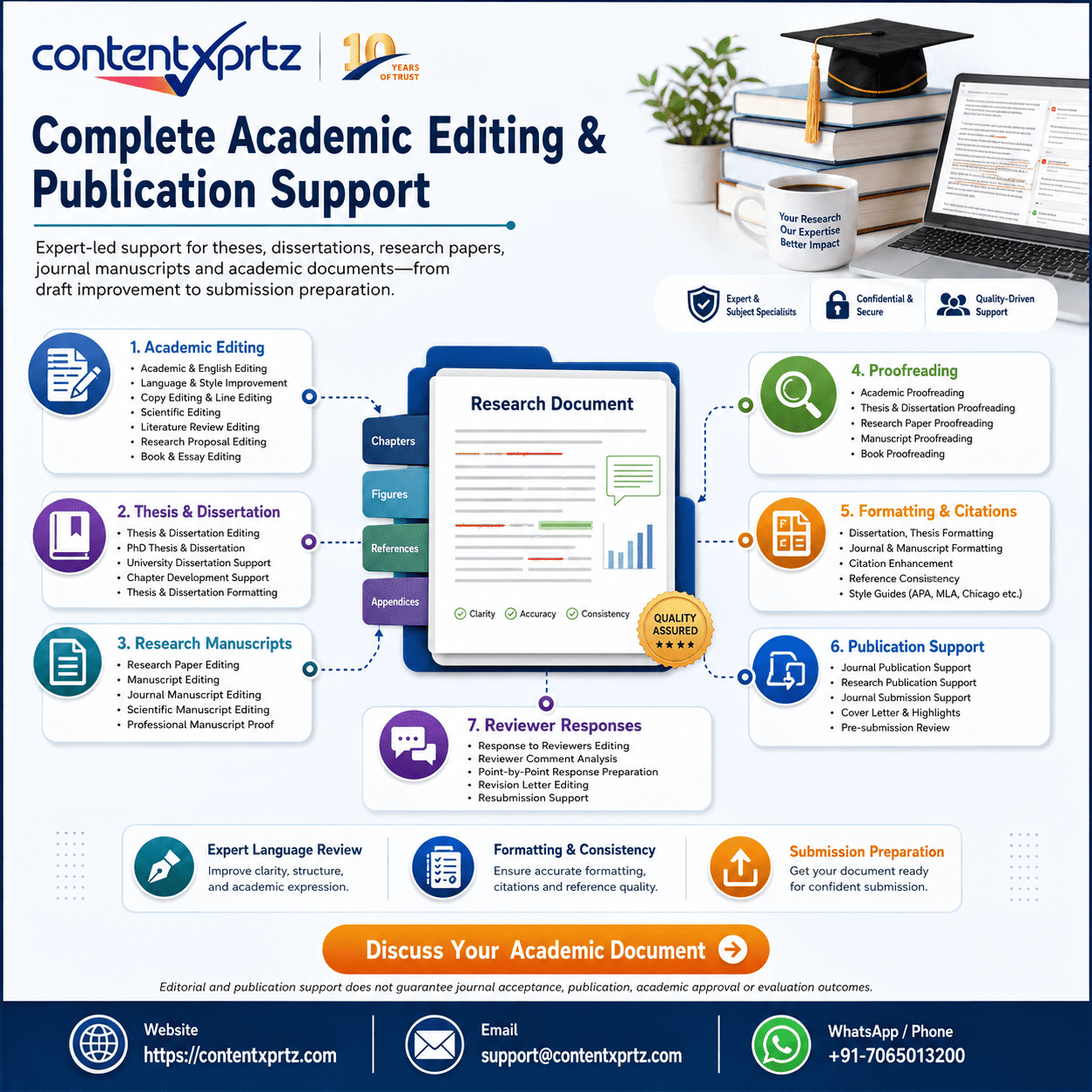
If you need help making academic material consistent, Contentxprtz can support academic editing and research paper editing without changing your underlying qualification claims or authorship responsibility.
Checklist: Can I Use Dr After My PhD?
- Has the university formally awarded or conferred your doctorate?
- Are you using the title to describe a real earned doctoral qualification?
- Is your field or role clear enough for the audience?
- Could the setting make people assume you are a licensed medical or other regulated professional?
- Have you checked your employer, university, journal, or professional body's style rules?
- Are you avoiding the redundant “Dr Name, PhD” form unless required?
- Are you accurately distinguishing an earned doctorate from an honorary award?
- For regulated work, have you checked local law and licensing requirements?
Summary: Does a PhD Make You a Doctor?
Yes. A PhD is a doctorate, and a person who has been formally awarded a PhD may generally use the title Dr. The title recognizes doctoral-level academic achievement. It does not, by itself, make the holder a physician, professor, or licensed professional.
The clearest way to use the title is contextually. In universities and research settings, Dr is routine. On CVs and professional profiles, “Name, PhD” can state the exact credential more clearly. In healthcare or other regulated environments, the holder should ensure that the title does not suggest a licence or professional authority they do not possess.
If you are still completing your doctorate, use your current status—such as PhD candidate or doctoral researcher—until the university confirms the award. Once the doctorate is formally conferred, you can choose whether Dr or the post-nominal PhD best fits your context.
Need Help Presenting Your PhD Research Clearly?
A doctoral title reflects the qualification, but your thesis, manuscript, research paper, or publication still needs to communicate its argument accurately and professionally. If your work needs language refinement, structure review, consistency checks, or publication-focused editing, Contentxprtz provides ethical academic editing support while preserving your authorship, meaning, data, and scholarly responsibility.
Frequently Asked Questions
Does a PhD make you a doctor?
Yes. A PhD is a doctoral degree, so a person who has been formally awarded a PhD may properly be described as a doctor and may generally use the title Dr. The word doctor here refers to the academic degree, not to a licence to practise medicine. Context matters: in a hospital or other healthcare setting, using Dr without clarifying that you are not a medical practitioner could confuse people. Universities, employers, professional bodies, and local law may also have their own conventions.
Can someone with a PhD put Dr before their name?
Generally, yes, once the degree has actually been conferred. A PhD graduate may write Dr Ananya Rao, for example. In academic publishing and many professional contexts, it is also common to write Ananya Rao, PhD instead. Style guides and institutions often prefer one form or the other. Using both Dr and PhD together is usually unnecessary because they communicate the same doctoral status.
Is a PhD doctor the same as a medical doctor?
No. A PhD holder and a medical doctor may both use the title doctor, but their qualifications and professional roles are different. A PhD is a research doctorate awarded for advanced scholarly work and an original contribution to knowledge. A medical doctor holds a medical qualification that may lead to clinical practice after meeting licensing requirements. A PhD does not authorize someone to diagnose patients, prescribe medicine, or practise medicine.
What does Doctor of Philosophy mean?
Doctor of Philosophy is the expanded name of the PhD, from the Latin philosophiae doctor. Despite the word philosophy, a PhD can be awarded in many fields, including physics, engineering, economics, literature, psychology, computer science, public health, and management. The word reflects the historical idea of advanced scholarly inquiry rather than limiting the degree to the academic discipline of philosophy.
Can I call myself Dr after submitting my thesis?
Usually not merely because the thesis has been submitted. The safer rule is to use the title only after the university has formally awarded or conferred the doctoral degree according to its regulations. Some universities may communicate that all degree requirements have been completed before the graduation ceremony, but the exact point at which the title is appropriate depends on the institution. Check the official award letter, transcript, regulations, or graduate school guidance.
Does a PhD make you a professor?
No. Doctor and professor are different titles. A PhD is a degree; professor is an academic rank or job title. Many professors hold PhDs, but a PhD graduate does not automatically become a professor. Academic ranks vary by country and institution and may include lecturer, assistant professor, associate professor, reader, professor, research fellow, or other titles.
Should I write Dr or PhD after my name?
Choose the form that fits the context. Dr Priya Sen is a conventional honorific form. Priya Sen, PhD is common in academic biographies, research profiles, conference programs, professional directories, and email signatures where displaying the exact credential is useful. Avoid Dr Priya Sen, PhD unless a specific organization asks for both, because the doctorate is being stated twice.
Can a professional doctorate holder use the title Dr?
Often yes. Degrees such as EdD, DBA, PsyD, DNP, and other doctorates are doctoral-level qualifications, though the exact degree structure and professional rights vary by jurisdiction. The ability to use an academic honorific should not be confused with professional licensure. A doctorate in a regulated profession does not by itself grant every legal right to practise that profession.
Is it misleading for a PhD holder to use Dr?
Not inherently. The title accurately reflects a doctoral qualification. It can become misleading if the context creates a false impression about expertise, registration, or professional authority. For example, a non-medical PhD holder speaking in a clinical setting should make their field clear if patients or the public could reasonably assume that Dr means licensed physician.
Do rules for the title doctor differ by country?
Yes. Social conventions, professional regulation, advertising rules, and protected-title laws differ across countries and professions. In many places, PhD graduates routinely use Dr, but regulated fields can impose additional restrictions on how titles are presented to the public. When the title is being used in healthcare, legal documents, advertising, regulated practice, or formal employment records, check local rules and the relevant professional body.
Does an honorary doctorate make someone a doctor?
An honorary doctorate is different from an earned research or professional doctorate. Some recipients may be addressed ceremonially according to local custom, but many universities and style authorities discourage honorary degree recipients from using Dr as a routine professional title because the degree was not earned through the usual doctoral program. The granting institution's convention is the best guide.
How should PhD candidates describe themselves before graduation?
Use a status that accurately reflects your position, such as PhD candidate, doctoral candidate, doctoral researcher, or PhD student, depending on your university's terminology. Do not present yourself as having a PhD until it has been formally awarded. On a CV, you can list the doctoral program as in progress and include the expected completion date if appropriate.
Conclusion: Use the Doctor Title Accurately and in Context
Earning a PhD is the completion of a doctoral qualification, so the academic title doctor is appropriate once the university has formally awarded the degree. The most useful distinction is not “real doctor versus not real doctor,” but which doctorate, in what field, and with what professional authority. A PhD researcher and a physician can both hold legitimate doctoral titles while doing very different work.
Use Dr when it helps your audience understand your qualification. Use “Name, PhD” when the exact credential is more informative. Before the award, describe yourself as a doctoral candidate or researcher. In regulated settings, state your role and licence clearly. That approach respects both academic achievement and the audience's need for accurate information.
For researchers preparing theses, manuscripts, or journal submissions, Contentxprtz can help improve language, structure, consistency, and presentation through ethical editorial support. At Contentxprtz, we don’t just edit; we help ideas reach their fullest potential.