Do Researchers Get Paid for Journal Articles? What Authors Should Know
Do researchers get paid for journal articles? In most academic publishing, the answer is no: researchers generally do not receive a direct payment from a scholarly journal simply because their research article is accepted and published. The financial relationship is usually the opposite of commercial freelance writing. Researchers write papers to communicate findings, establish a scholarly record, contribute to a discipline, meet degree or employment expectations, and strengthen future opportunities. Their salary or research income normally comes from a university, laboratory, company, hospital, government agency, grant, fellowship, consultancy, or another professional source rather than from the journal.
This surprises many first-time authors because journals can charge readers for access, universities can pay large subscription bills, and open-access journals can charge article processing fees. It is natural to ask where the author's share goes. The answer is that standard scholarly journal articles are normally published under an academic communication model, not a royalty model. The article can be professionally valuable without generating a cheque from the journal. In some cases, the author or the author's institution may even pay an article processing charge (APC) to make the work openly accessible.
There are important exceptions. A journal or professional publication may commission an invited review, commentary, educational feature, editorial, or specialist article and offer an honorarium. Researchers can also earn money indirectly from the expertise demonstrated by their publications through promotion, funded projects, consulting, speaking, teaching, industry collaboration, intellectual property, or other professional opportunities. Those earnings do not mean the journal paid for the research article itself.
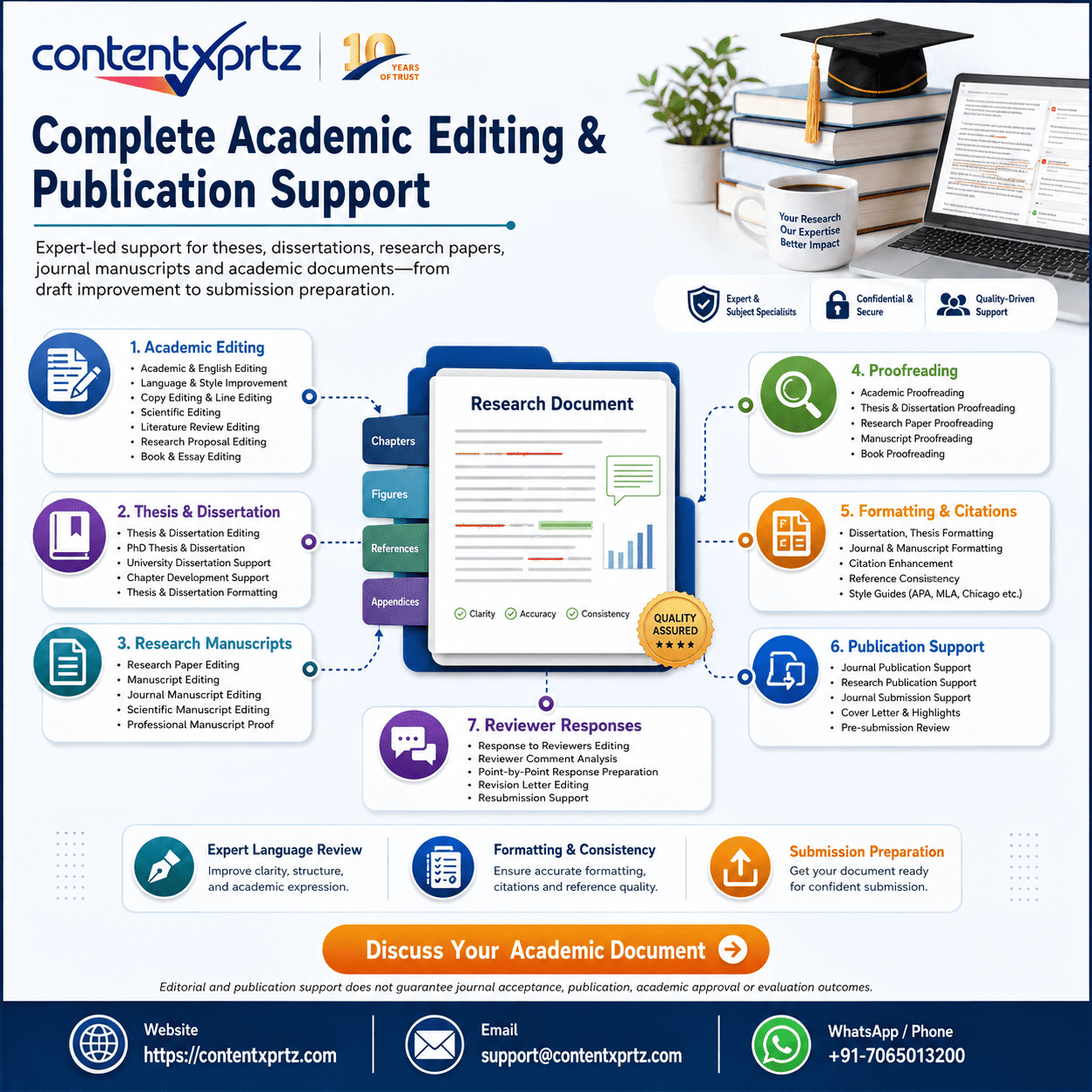
For researchers deciding where to submit, the safest approach is to separate four questions: Will the journal pay me? Will I have to pay the journal? Who can fund publication costs? What professional value can the article create? This guide explains each question, shows common publishing models, and outlines practical checks before submission. If you are preparing a manuscript rather than evaluating publishing economics, Contentxprtz's research paper editing service can support clarity and journal readiness without changing your authorship responsibility.
Quick Answer: Do Researchers Get Paid for Journal Articles?
Most researchers are not paid by journals for publishing ordinary scholarly articles. A journal publication is usually an academic output, not a paid freelance assignment. Researchers may be salaried by a university or employer, funded through a fellowship or grant, or paid for other professional work, but the journal itself normally does not pay a fee for an unsolicited research manuscript.
In some publishing models, authors instead face a publication cost. Open-access journals may charge an APC, although institutions, funders, library agreements, discounts, or waivers can cover all or part of that cost. Elsevier and Springer Nature both describe open-access systems in which an APC may be paid by an author, institution, or funder. A subscription route may have no APC, depending on the journal.
Exceptions exist when a publication explicitly commissions an invited contribution and offers an honorarium or contractual payment. Treat that as a separate arrangement and confirm it in writing. The key distinction is simple: being an author does not automatically mean being a paid writer for the journal.
Key Takeaways
- Standard academic research articles are usually unpaid by the journal.
- A researcher's salary normally comes from an employer, grant, fellowship, or professional role.
- Open-access publishing can involve an article processing charge paid by the author, institution, or funder.
- Subscription publishing may allow publication without an APC, depending on the journal and article type.
- Invited reviews, commentaries, editorials, or commissioned pieces may sometimes carry an honorarium.
- Publications can create indirect financial value through promotion, grants, consulting, reputation, and career opportunities.
- Always read the journal's author instructions, fee policy, and publishing agreement before submission.
What This Page Covers
- Why most journals do not pay authors of standard research papers
- How subscription, open-access, hybrid, and society-supported journals handle money
- The difference between author payment, APCs, page charges, and institutional funding
- When invited or commissioned academic writing may be paid
- How publications can affect salary and career opportunities indirectly
- How to check a journal's fees and avoid misleading payment claims
- What researchers should clarify before signing a publishing agreement
Table of Contents
Methodology and Academic Sources
This guide distinguishes direct journal compensation from the broader financial effects of academic authorship. It draws on publisher information about open-access charges and on widely used authorship guidance. The ICMJE authorship recommendations explain that authorship carries credit, responsibility, and accountability. They also note that authorship can have academic, social, and financial implications; that does not mean journals routinely pay authors.
For publishing costs, the Elsevier open-access guidance and Springer Nature journal policies explain APC-based open-access models and institutional or funding support. Policies can change, so researchers should always verify the current terms on the specific journal's website before submission.
How Money Actually Flows in Academic Journal Publishing
The money flow in academic publishing depends on the journal model, and the author is not automatically the recipient. A useful way to understand the system is to identify who is paying for publication, access, or both.
| Publishing model | Who commonly funds the publication system? | Does the journal usually pay the research author? | Can the author face a fee? |
|---|---|---|---|
| Subscription journal | Libraries, institutions, societies, and individual subscribers | Usually no | Often no APC, though some journals can have page, colour, or other charges |
| Fully open-access journal | APCs, institutions, funders, societies, subsidies, or mixed support | Usually no | Often yes, unless covered or waived |
| Hybrid journal | Subscriptions for closed articles; APCs for selected open-access articles | Usually no | Only if the author chooses or is required to use the OA route, subject to journal policy |
| Diamond/platinum open access | Institutions, societies, libraries, grants, public funding, or sponsors | Usually no | Often no author-facing APC |
| Commissioned professional or invited piece | Publisher, society, sponsor, or publication budget | Sometimes, if explicitly agreed | Normally governed by the commission terms |
This table shows why the question “Does the journal make money?” is different from “Does the author get paid?” A subscription journal may receive subscription revenue and still not pay research authors. An open-access journal may charge an APC and still provide a legitimate peer-review and publication service. A society journal may be subsidized. A commissioned publication may pay an honorarium. The details are venue-specific.
Why Researchers Usually Do Not Get Paid for Journal Articles
Researchers usually publish journal articles for scholarly credit and communication, not for a per-article payment. Academic authorship operates inside an incentive system that is different from commercial writing.
Publication is part of the research role
For many university researchers, writing papers is part of the job they are already paid to perform. A salary may cover teaching, research, supervision, administration, clinical duties, or a combination of responsibilities. A funded research project may also include researcher salaries or stipends. In that situation, the researcher has already been compensated for professional work through an employer or grant, even though the journal pays nothing at publication.
Authorship creates credit and accountability
Academic authorship is not merely a byline. It signals intellectual contribution and responsibility for the published work. That is why authorship can influence promotion, grant competitiveness, collaboration, and reputation. The ICMJE framework, for example, links authorship with substantive contribution, drafting or critical revision, final approval, and accountability. Those responsibilities are fundamentally different from selling a piece of prose to a magazine.
The expected return is often indirect
A researcher may gain citations, invitations to collaborate, speaking opportunities, consulting work, stronger grant applications, or promotion prospects after publishing influential research. These outcomes can have financial consequences, but they are not royalties from the article. It is more accurate to say that publication can contribute to a researcher's professional capital.
Do Researchers Pay Journals Instead? Understanding APCs and Other Charges
Some researchers encounter publication fees, especially for open access, but not every journal charges authors. The most common fee is the APC. It is associated with many fully open-access journals and optional open-access routes in hybrid journals.
Publisher policies show why authors should check the specific venue instead of assuming one rule applies everywhere. Elsevier explains that open-access publishing can be funded through APCs paid by authors or others on their behalf, while subscription content is supported through reading-side payments. Springer Nature likewise explains that APCs can fund publication services and that institutions or funders may support eligible authors.
Who actually pays an APC?
The invoice may be addressed to the corresponding author, but the money can come from an institution, funder, library agreement, departmental budget, or waiver programme. Researchers should therefore ask their library or research office about agreements before using personal funds. Some journals also provide waivers or discounts according to location, financial need, institutional agreement, or other eligibility rules.
APC does not mean acceptance is for sale
A legitimate journal should separate editorial decisions from payment. A journal can charge an APC and still reject a manuscript that does not meet its standards. Conversely, a subscription journal can reject a manuscript even though authors pay no APC. Researchers should be cautious of any publication that frames payment as a way to secure guaranteed acceptance.
When Researchers May Get Paid for Academic or Journal Writing
Payment is possible when the publication relationship is explicitly commissioned or commercial rather than a standard unsolicited research submission. The important word is explicitly.
Invited reviews and commissioned perspectives
A journal or professional publication may ask an established researcher to write a review, perspective, commentary, clinical update, policy analysis, or educational piece. Some invitations are unpaid. Others include a fixed honorarium. If money is involved, the editor should communicate the amount, payment process, tax or invoice requirements, and rights in writing.
Trade publications and professional media
A researcher writing for a professional magazine, industry publication, newspaper, or specialist website may be treated as a contributor or freelance expert. That is a different market from standard peer-reviewed research publishing, and payment is more common when the publication normally commissions contributors.
Books, chapters, and other formats
Commercial book publishing can involve royalties or advances, although academic books and edited volumes vary widely. An academic journal article should not be assumed to follow the same contract model as a book. Researchers moving between formats should read each agreement independently.
Consultancy and research translation
A journal article can lead to paid work such as consulting, training, advisory roles, expert review, speaking, or commissioned research. Again, that income comes from the follow-on professional engagement, not from the ordinary journal article itself.
Can Journal Articles Increase a Researcher's Income Indirectly?
Yes, publications can affect income indirectly when an employer, funder, or market values the research record. The effect differs by country, institution, career stage, and discipline.
| Pathway | Possible benefit | Important caution |
|---|---|---|
| Academic promotion or tenure | Stronger case for advancement where research output is part of evaluation | Institutions assess quality and contribution differently; article counts alone may be insufficient |
| Research grants | Evidence of expertise, productivity, and ability to complete prior work | Funding decisions also depend on proposal quality, team, methods, fit, impact, and feasibility |
| Industry roles | Demonstrated specialist knowledge and research capability | Employers may value applied skills and outcomes more than publication volume |
| Consulting and speaking | Visibility can generate invitations for paid expert work | Conflict-of-interest disclosure may be required |
| Collaboration and reputation | New networks, projects, and leadership opportunities | Authorship should reflect genuine contribution rather than reputation building alone |
It is therefore reasonable to view publication as part of a longer professional pathway. The mistake is to confuse that pathway with direct journal compensation. A publication can be economically valuable without the journal paying the author.
What to Check Before You Submit a Journal Article
Researchers should verify the journal's financial and publishing terms before submission, not after acceptance. A few minutes of checking can prevent confusion over fees, rights, and expectations.
1. Read the author instructions
Look for a section on open access, publication charges, page charges, colour charges, supplementary material, editing, and optional services. If fees are not clear, contact the editorial office through the journal's official domain.
2. Confirm the publishing route
Determine whether the journal is subscription-only, fully open access, hybrid, or supported by a society or institution. Do not assume an open-access label always means you personally must pay.
3. Check institutional and funder support
Ask your library, research office, grant manager, or department whether an agreement covers the APC. The corresponding author's affiliation can matter for eligibility.
4. Read the publishing agreement
Understand copyright, licence, self-archiving, reuse, author responsibilities, and any charges. If a piece is commissioned, confirm the honorarium and payment terms in the same way you would confirm scope and deadline.
5. Keep editorial quality separate from payment
Never treat payment as evidence that a journal is reputable, and never treat a free journal as automatically trustworthy. Evaluate peer review, editorial ownership, transparency, archiving, indexing claims, and publisher identity independently.
Common Mistakes Researchers Make About Journal Payments
- Assuming the journal owes royalties: standard research articles rarely operate under a royalty model.
- Confusing salary with journal payment: a university salary may compensate research work, but it is not payment from the publisher.
- Paying an APC personally before checking support: institutions and funders may have agreements, waivers, or eligible budgets.
- Believing an APC guarantees acceptance: legitimate peer review and editorial decisions should be independent of payment.
- Assuming every invitation is paid: invited manuscripts can be unpaid unless a commission explicitly offers an honorarium.
- Ignoring the contract: rights, fees, licensing, and payment should be verified in writing.
- Choosing a journal only because it is free or paid: scope, editorial quality, audience, ethics, and fit matter more.
Researchers who need help preparing a manuscript for a legitimate target journal can use publication support or academic editing services as a preparation step. Editing support should improve communication and compliance; it should never replace authorship, research judgment, or journal decision-making.
Practical Examples: Who Gets Paid, Who Pays, and Why?
Example 1: A salaried university researcher
A lecturer completes a study as part of a university role and submits it to a subscription journal. The article is accepted after peer review. The journal pays no author fee, and the researcher pays no APC. The financial benefit may come later if the publication strengthens promotion or grant applications. Correct interpretation: the university salary funds the research role; the journal publication provides scholarly credit.
Example 2: A PhD scholar choosing open access
A doctoral candidate receives an acceptance offer from a fully open-access journal with an APC. The student initially assumes the charge must come from personal savings. Before paying, the student checks with the university library and discovers an institutional agreement that covers eligible articles. Correct approach: verify funding, discounts, and waivers before making a personal payment.
Example 3: An invited review with an honorarium
An experienced researcher receives an email from an editor asking for a 3,000-word invited review. The invitation includes a fixed honorarium, deadline, revision expectations, and payment process. The researcher confirms the terms before accepting. Correct interpretation: this is a paid commission because the journal explicitly offered compensation; it should not be generalized to ordinary research submissions.
Example 4: A researcher expecting royalties
An early-career author sees that readers must subscribe to access an article and assumes the author should receive a percentage of those subscription fees. The publishing agreement contains no royalty clause. Correct approach: understand the contract and the journal's business model instead of assuming book-style royalties apply to journal articles.
Journal Payment and Publication-Fee Checklist for Researchers
- Confirm whether the manuscript is an unsolicited research article or an explicitly commissioned piece.
- Check whether the journal states any author honorarium or payment.
- Identify whether the journal is subscription, open access, hybrid, or another model.
- Record every possible charge: APC, page charge, colour charge, optional service, tax, or supplementary fee.
- Ask the university library or research office about institutional open-access agreements.
- Check grant terms for eligible publication costs.
- Review waiver and discount rules before paying.
- Verify the journal's editorial process, publisher identity, and claims independently of fees.
- Read copyright, licensing, self-archiving, and reuse terms before signing.
- Keep invoices, approval emails, commission letters, and publishing agreements for your records.
- Never pay in exchange for a promise of guaranteed acceptance.
- Make sure all authors meet genuine authorship criteria and approve the final submission.
How Contentxprtz Can Help Researchers Preparing Journal Articles
Contentxprtz can help with manuscript quality and publication readiness; it cannot turn a standard unpaid journal article into a paid commission. The relevant support is editorial and strategic: improving clarity, academic English, structure, consistency, journal formatting, response preparation, and submission readiness while preserving the researcher's ideas and responsibility.
If your main concern is presentation quality, the research paper editing service is the most directly relevant next step. For authors who are still choosing a venue or preparing a submission package, journal publication support may help with ethical preparation and process guidance. Neither service can guarantee acceptance, publication, citation impact, salary changes, or payment from a journal.
Summary: Do Researchers Get Paid for Journal Articles?
Most researchers do not get paid by journals for ordinary research articles. Their income typically comes from employment, grants, fellowships, consulting, or other professional activity. Depending on the publishing route, an author may instead encounter publication costs such as an APC, which can sometimes be covered by a university, funder, or publisher agreement.
Payment is more plausible when a publication explicitly commissions a contribution and offers an honorarium. Journal articles can also create indirect financial value by supporting promotion, grants, consulting, collaboration, and reputation. The practical lesson is to check the journal's author instructions, fee policy, funding options, and publishing agreement before submitting.
Frequently Asked Questions
Do researchers get paid for journal articles?
Usually, no. In most scholarly journals, researchers are not paid a fee or royalty simply because a research article is accepted and published. The journal publication is primarily a way to communicate findings, establish a scholarly record, receive academic credit, and contribute to a field. A researcher's income normally comes from an employer, research grant, fellowship, consultancy, clinical work, teaching, or another professional role rather than from the journal. There are exceptions: some publications may commission invited articles, essays, reviews, educational pieces, or journalism-style content and offer an honorarium, but that arrangement should be stated explicitly. Authors should never assume that acceptance creates a right to payment. Before submission, read the journal's author instructions, publishing agreement, fee page, and any commission letter so you know whether the article is unpaid, carries a publication charge, or is part of a paid commission.
Why don't academic journals usually pay authors?
Academic journal publishing is built around scholarly communication rather than a conventional freelance-writing model. Researchers submit work because publication can document discoveries, support promotion or degree requirements, establish priority, strengthen a grant or job record, and make findings available to other scholars. The author provides the intellectual work, while the journal manages editorial screening, peer review, production, hosting, preservation, and dissemination. The financial model varies by journal: some rely on subscriptions, some on society or institutional support, and some on article processing charges for open access. None of these models automatically means the author receives payment. The practical rule is to separate the value of authorship from direct cash compensation. Publication can have substantial professional value, but that value is usually indirect.
Do researchers ever receive royalties from journal articles?
Royalties from standard research journal articles are uncommon. Journal articles are generally not treated like commercial books that generate author royalties from each sale. Publishing agreements may instead address copyright ownership, licensing, reuse, self-archiving, and open-access rights. Some commissioned or specialist publications can have different arrangements, so authors should check the contract rather than generalize from one venue to another. If a publisher offers payment, the amount and conditions should appear in a commissioning agreement or other written terms. Researchers should also distinguish royalties from reuse permissions or licensing arrangements; those are separate legal and commercial mechanisms. When in doubt, ask the journal's editorial office what compensation, if any, applies before accepting a commission or signing an agreement.
Do researchers have to pay to publish journal articles?
Sometimes, but not always. Many journals allow authors to publish without paying an article processing charge, particularly when the article follows a subscription route. Fully open-access journals commonly finance publication through an article processing charge, although the charge may be paid by the author's institution, funder, national agreement, or waiver rather than personally by the researcher. Hybrid journals can offer both subscription and open-access routes. Publishers such as Elsevier and Springer Nature explain that open-access charges support publishing services and may be covered through institutional agreements or discounts. Always check the individual journal's current fee page before submission because charges, waivers, taxes, and eligible article types can vary. A fee should never be confused with guaranteed acceptance; legitimate editorial and peer-review decisions should remain independent of payment.
What is an article processing charge or APC?
An article processing charge, usually shortened to APC, is a publication fee associated with many open-access journals and open-access options in hybrid journals. It is designed to support services involved in publication and to make the final article openly accessible under the journal's licensing model. The party paying the APC may be the author, university, library consortium, research funder, employer, or another approved source. An APC is not a payment to the author. It flows in the opposite direction: it is a publishing cost. Researchers should confirm the exact charge, currency, tax treatment, waiver policy, institutional agreement, and point at which payment becomes due. Reputable journals make fee information reasonably transparent and do not present payment as a guarantee of favorable peer review.
Can a university or research grant pay publication fees?
Yes. Many universities, libraries, research organizations, and funders maintain arrangements that can cover or reduce eligible open-access publication charges. Some grants also permit budgeted publication costs, subject to the grant's rules. Publisher agreements may automatically identify eligible corresponding authors based on institutional affiliation, but researchers should not rely on an assumption. Check the funder's award conditions, ask the university library or research office about open-access agreements, and verify the journal's eligibility rules before choosing a publishing route. If funding is limited, compare legitimate subscription, repository, waiver, discount, and institutional options before paying personally. Keep written evidence of any approval because finance teams may require an invoice, acceptance letter, funder code, or proof of affiliation.
Can publishing journal articles increase a researcher's salary?
Possibly, but indirectly. A journal normally does not increase your salary merely because it published your article. However, publications can contribute to promotion, tenure, performance review, fellowship competition, grant applications, professional reputation, or eligibility for research roles, depending on the employer and discipline. Those outcomes can later affect compensation. The relationship is therefore institutional, not transactional: an employer or funder may reward a strong research record, while the journal itself may pay nothing. Researchers should understand the evaluation system that actually applies to them. Quality, contribution, relevance, integrity, and appropriate authorship often matter more than simply accumulating article counts, and some institutions explicitly discourage simplistic publication metrics.
Are invited reviews, editorials, or commissioned articles paid?
They can be, but payment is not automatic. Some journals, magazines, professional publications, handbooks, educational platforms, or special projects may commission a review, commentary, editorial, perspective, or other contribution and offer an honorarium. Other invitations are unpaid and are offered for scholarly visibility or service to the field. The only reliable answer is the written invitation or contract. Before agreeing, confirm the expected word count, deadline, peer-review status, copyright or license terms, payment amount, invoicing requirements, tax documentation, and whether revisions are included. An invitation to submit is not the same as a paid commission, and an invited article can still be subject to editorial assessment.
Is it a red flag if a journal asks for money?
Not by itself. Legitimate open-access journals can charge transparent article processing fees, and reputable publishers may have waivers, discounts, or institutional agreements. The red flag is not the existence of a fee; it is the combination of poor transparency, aggressive solicitation, unclear editorial ownership, unrealistic promises, hidden charges, fake metrics, suspicious indexing claims, or payment demands tied to guaranteed acceptance. Review the journal's website carefully, confirm the publisher, editorial board, peer-review process, fee policy, archiving, licensing, and contact information, and verify any indexing claim using the index itself. If a journal pressures you to pay quickly before providing clear terms, investigate further before submitting or transferring money.
How can Contentxprtz help if the journal does not pay authors?
The useful question is not how to turn an ordinary research article into direct journal income, but how to make the manuscript accurate, clear, ethical, and ready for the publication process you have chosen. Contentxprtz can support researchers with research-paper editing, language polishing, structure, journal-readiness checks, formatting, and publication support while preserving the author's ideas and responsibility. Professional editing does not create entitlement to payment and cannot guarantee acceptance. It can, however, help authors present their work more clearly, address avoidable language or formatting issues, and understand submission requirements. Researchers remain responsible for the research, data, claims, citations, authorship decisions, conflicts of interest, and final submission.
Conclusion: Treat Journal Publication as Scholarly Value, Not Automatic Author Income
The central answer is straightforward: publishing a research article usually does not create a direct payment from the journal. Researchers publish because the article communicates evidence, establishes a scholarly contribution, supports professional evaluation, and may open future opportunities. In some cases, the publishing process involves no author fee; in others, open access can involve an APC funded by the author, institution, or research sponsor.
If a publication wants to pay you, expect that arrangement to be stated explicitly as a commission, honorarium, or contractual fee. If a journal wants you to pay, verify the fee, funding options, journal legitimacy, and editorial independence before transferring money. If the manuscript itself needs stronger language, structure, formatting, or journal-readiness review, professional research-paper editing can help you prepare the work ethically while you retain full responsibility for the research and submission.
“At Contentxprtz, we don’t just edit; we help ideas reach their fullest potential.”