Do Conference Papers Count as Publications?
Do conference papers count as publications? In most academic contexts, the answer is yes when the paper has been formally published in conference proceedings, a proceedings journal, or another permanent scholarly record. But presenting research at a conference does not automatically create a publication. A talk, poster, panel contribution, workshop appearance, or unpublished abstract may belong on your academic CV, yet it should normally be described as a presentation rather than a full publication.
The distinction matters because students and researchers are often asked to report “publications” for PhD applications, scholarships, faculty recruitment, promotion, annual review, grant applications, research profiles, and institutional reporting. In these situations, committees may care not only about whether something was published, but also about whether it was a full paper, peer reviewed, archival, indexed, assigned a DOI, or published by a recognised scholarly society or proceedings publisher.
This guide explains how to classify a conference paper accurately, how conference proceedings differ from journal articles, when abstracts and posters count, how to list conference work on a CV, and what to check before claiming a conference contribution as a peer-reviewed publication. The goal is accurate academic representation, not inflating or undervaluing your research record.
Quick Answer: Do Conference Papers Count as Publications?
Yes, a conference paper can count as a publication if the paper itself is formally published. The clearest examples are full papers published in conference proceedings, proceedings journals, or established digital libraries. ACM, for example, describes accepted conference papers as being included in proceedings and made available in the ACM Digital Library, while IEEE operates a conference publications program for proceedings distributed through IEEE Xplore.
A conference presentation alone is different. If you delivered an oral presentation or poster but no paper or abstract was formally published, you have a conference presentation, not necessarily a publication. If only an abstract was published, it may be a published conference abstract, but many universities and hiring committees distinguish that from a full conference paper.
Therefore, when someone asks whether your conference work “counts,” answer four separate questions: Was it formally published? What document type was published? Was it peer reviewed? How does the evaluating institution classify that output?
Key Takeaways
- A full paper published in conference proceedings normally counts as a scholarly publication.
- Presenting at a conference does not by itself mean that you have a publication.
- A published conference abstract is a publication-type output, but it is usually weaker than a full proceedings paper and should be labelled accurately.
- Peer review, publication, indexing, and DOI assignment are related but separate characteristics.
- Conference papers can carry substantial academic weight in fields such as computing and engineering.
- CVs should separate full publications from posters, talks, and unpublished presentations when that improves clarity.
- For promotion, PhD, funding, or institutional reporting, the local written rules override generic advice.
What This Page Covers
- When a conference paper qualifies as a publication
- The difference between proceedings papers, abstracts, posters, and presentations
- Whether conference papers are peer reviewed
- How conference papers compare with journal articles
- How to list conference papers correctly on an academic CV
- What DOI, ISBN, indexing, and archival status actually tell you
- When a conference paper can later become an expanded journal article
Table of Contents
- What counts as a conference publication?
- Conference output types compared
- Peer review and publication status
- Conference paper vs journal article
- How to list conference work on a CV
- PhD, promotion, and funding evaluation
- Publishing an extended journal version
- Common classification mistakes
- Publication-status checklist
- Frequently asked questions
Methodology and Academic Sources
This article uses a practical publication-classification approach: identify the written output, verify whether it entered a permanent scholarly record, distinguish the review process from publication status, and then apply the rules of the institution evaluating the researcher. Conference publishing conventions vary substantially by discipline, so no single label should be applied without checking the venue and document type.
For current examples of archival conference publication, see IEEE Conference Publications, the ACM CHI papers guidance, and ACM Collective Intelligence paper and talk categories. These examples show why full papers, short talks, and abstracts can have different archival and publication treatment even within respected conference ecosystems.
Researchers should also check their university, funding agency, professional society, and target publisher rules. Contentxprtz can assist with ethical research paper editing and publication-readiness support, but the author remains responsible for accurately describing prior dissemination and publication status.
What Counts as a Conference Publication?
A conference contribution counts most clearly as a publication when a written scholarly work is formally issued as part of a permanent proceedings record. The record may be hosted by a society, scholarly publisher, university press, digital library, or proceedings platform. It normally has enough bibliographic information for another researcher to identify and cite the work reliably.
Typical signs of formal publication include a proceedings title, publisher or society name, publication year, page range or article number, ISBN or ISSN, stable URL, database record, and sometimes a DOI. None of these signals is individually mandatory in every discipline, but together they help distinguish archival publication from a temporary conference webpage or presentation schedule.
Published conference paper
A full written paper accepted by a conference and included in its proceedings is normally a publication. In computing, engineering, information systems, and some interdisciplinary fields, highly selective conference proceedings may be among the most important venues for new research.
Accepted paper that is not yet published
If your paper has been accepted but the proceedings have not been released, describe it as accepted, in press, or forthcoming only when that wording matches the venue’s status. Do not present an accepted submission as already published if the formal publication has not occurred.
Conference presentation without proceedings
If you presented slides or spoke at a meeting but no paper or abstract was published, the scholarly activity is real and can be valuable, but it normally belongs under “Conference Presentations,” “Invited Talks,” or a similar CV heading rather than “Publications.”
Conference Papers, Abstracts, Posters, and Talks: What Counts?
The word “conference paper” is used loosely, which creates many CV and application mistakes. Use the actual document type instead of relying on the event label.
| Conference output | Usually a publication? | Best way to describe it | What to verify |
|---|---|---|---|
| Full paper in published proceedings | Yes | Conference paper / proceedings paper | Proceedings record, publisher, pages/article number, DOI if available |
| Short paper in published proceedings | Usually yes | Short conference paper | Whether it is archival and formally published |
| Extended abstract in proceedings | Sometimes, but not equivalent to full paper | Published extended abstract | Archival status and permanent record |
| Abstract in journal supplement or abstract book | Often a published abstract | Conference abstract | Journal/proceedings citation details |
| Poster only | No, unless an abstract/paper was published | Poster presentation | Whether a separate abstract record exists |
| Oral presentation only | No, unless an abstract/paper was published | Conference presentation | Program listing and any published companion work |
| Invited keynote or panel | Not automatically | Invited talk / keynote / panel | Whether a paper or chapter was separately published |
| Non-archival workshop paper | Depends on venue rules | Workshop paper, labelled non-archival if applicable | Permanent proceedings and reuse policy |
One useful real-world example comes from ACM Collective Intelligence 2026: its full papers are described as archival proceedings publications with individual DOIs, while shorter talks based on extended abstracts are described as non-archival and not assigned individual DOIs. That difference shows why two accepted contributions at the same event may not carry the same publication status.
Does a Conference Paper Count as a Peer-Reviewed Publication?
Only if the conference actually used peer review for that paper. A paper can be published without undergoing the same review process as a journal article, and a presentation can be selected through editorial screening rather than external peer review. Therefore, “published” and “peer reviewed” should never be treated as synonyms.
Many established conferences use rigorous peer review. Some assign multiple external reviewers, use double-anonymous review, require revisions, and publish only accepted manuscripts. Other events may review only an abstract, conduct a lighter program-committee review, or accept most submissions. The phrase “peer-reviewed conference paper” is appropriate only when you can verify that review process.
How to verify peer review
- Read the conference call for papers and author guidelines.
- Check whether reviewers evaluated the full manuscript or only the abstract.
- Look for a documented review model, such as single-anonymous or double-anonymous peer review.
- Check whether the final paper had to satisfy revision or camera-ready requirements.
- Avoid inferring peer review merely because the conference is international, indexed, or organised by a recognised institution.
If an application form asks specifically for “peer-reviewed publications,” include only conference papers whose review status you can defend. If uncertain, create a separate conference-proceedings category and let the evaluator see exactly what the output is.
Conference Paper vs Journal Article: Are They the Same Type of Publication?
No. Both can be legitimate scholarly publications, but they are different publication formats. Conference papers are linked to a specific scholarly meeting and are often published in proceedings. Journal articles appear in periodical journals and usually follow a journal-specific review and production cycle.
| Feature | Conference paper | Journal article |
|---|---|---|
| Publication venue | Conference proceedings or proceedings journal | Academic journal |
| Timing | Often tied to conference deadlines | Rolling or issue-based submission |
| Typical length | Can be shorter, but varies widely | Often longer, depending on journal |
| Review cycle | Frequently fixed and comparatively compressed | Often allows multiple revision rounds |
| Importance by discipline | Very high in some computing/engineering fields | Dominant in many sciences, social sciences, and humanities |
| Presentation requirement | Often yes | Usually no |
The prestige hierarchy is discipline-specific. A top computer science conference can be extremely selective and influential, while in another discipline conference outputs may be viewed mainly as preliminary dissemination before journal publication. Use field norms rather than a universal assumption that journals are always “real publications” and conferences are not.
Do Conference Proceedings Count as Publications?
Yes, conference proceedings are themselves scholarly publications, and papers included in them are generally publication outputs. Proceedings are collections of conference contributions released as a volume, series, journal issue, or digital publication. IEEE explicitly operates a Conference Publications Program that facilitates proceedings and post-conference distribution, and ACM conferences commonly publish accepted papers through the ACM Digital Library.
However, not every conference produces archival proceedings. Some meetings publish only a program booklet, schedule, slide deck, abstract collection, or temporary website. The label “proceedings” is therefore useful only when you verify what the proceedings actually contain and how permanently they are published.
Do DOI, ISBN, Scopus, or Web of Science Determine Publication Status?
They provide useful evidence, but none of them alone defines whether a work is a publication. A DOI is a persistent identifier commonly assigned to published papers. An ISBN may identify a proceedings volume. Scopus and Web of Science are indexing databases that cover selected source titles and records. These features improve discoverability and verification, but publication status should begin with the formal publication record itself.
- DOI: strong evidence of a persistent scholarly record, but not proof of review quality.
- ISBN: may identify the proceedings book or volume rather than each individual paper.
- Scopus/Web of Science indexing: can add visibility and may matter for institutional metrics, but not all legitimate conference publications are indexed.
- conference publishing visibility: useful for discovery, but appearing in conference publishing does not certify publication quality or peer review.
If a university says that only Scopus-indexed conference papers count for a particular assessment, that is an institutional eligibility rule, not a universal definition of publication.
How to List Conference Papers on an Academic CV
List each output according to what it actually is. A transparent CV is usually stronger than one that groups every conference activity under “Publications.” Reviewers can quickly recognise full proceedings papers, abstracts, posters, and talks when headings are clear.
Option 1: Separate journal and conference publications
This format works well in disciplines where both output types are common:
- Peer-Reviewed Journal Articles
- Peer-Reviewed Conference Papers / Proceedings
- Conference Abstracts
- Conference Presentations and Posters
Option 2: One publications section with document labels
If your CV is short, you can use one publications section but label conference items clearly, for example “[Conference paper]” or include the proceedings title in the citation.
What to include in the citation
- All authors in the required citation order
- Year
- Paper title
- Proceedings or conference title
- Publisher or society, where applicable
- Page range or article number
- DOI or stable URL
- Status such as accepted, in press, or published only when accurate
If you need help making publication lists consistent with a journal, university, or style guide, Contentxprtz offers research paper editing and academic formatting support without changing the underlying authorship or publication record.
Do Conference Papers Count for PhD Applications, Promotions, or Funding?
They can, but the evaluator’s written rules determine how much they count. A doctoral admissions committee may view a full proceedings paper as strong evidence of early research experience. A faculty promotion system may award different weight to journal articles, full conference papers, abstracts, posters, and invited talks. A funding agency may use yet another reporting structure.
Before entering a conference item into an application portal, read the definitions provided for “publication,” “peer-reviewed output,” “proceedings,” “conference contribution,” and “accepted/in press.” If the form is ambiguous, use the most precise category available and preserve the full citation.
Practical example: PhD applicant
A student has one eight-page paper published in proceedings with a DOI and one poster that appears only in the conference program. The paper can normally be listed as a conference publication. The poster should be listed as a poster presentation unless a corresponding abstract was also published.
Practical example: faculty annual review
A lecturer presented three talks but only one was published as a full proceedings paper. Reporting all three under “Publications” could overstate the record. A clearer report lists one proceedings paper and two conference presentations.
Practical example: indexed-output requirement
A university promotion policy awards points only for conference proceedings indexed in a named database. A legitimate unindexed proceedings paper is still a publication in the ordinary scholarly sense, but it may earn no points under that particular policy.
Can a Conference Paper Later Become a Journal Article?
Often yes, but the later article must comply with the journal’s originality, overlap, citation, disclosure, and copyright policies. In some disciplines, researchers first publish a concise conference paper and later develop a more complete journal article with additional experiments, expanded theory, new data, deeper analysis, or substantial methodological detail.
The safe approach is to treat the earlier conference paper as prior publication that must be disclosed, not hidden. Cite the conference version where appropriate, explain the relationship in the cover letter if the journal requests it, and make sure the journal manuscript offers a genuinely extended scholarly contribution. Do not copy large sections verbatim without considering copyright and duplicate-publication rules.
Before submission, compare the journal’s author guidelines with the conference copyright agreement. When the relationship between the two versions is complex, publication-support or manuscript editing can help clarify the new contribution, but ethical decisions and disclosure remain the author’s responsibility.
Common Mistakes When Counting Conference Papers as Publications
- Calling every presentation a publication. A scheduled talk is not automatically a published paper.
- Calling every conference item peer reviewed. Review processes differ and may cover only an abstract.
- Treating an abstract like a full paper. Both may be citable, but they represent different levels of published detail.
- Assuming a DOI means high quality. A DOI identifies an object; it does not grade the review process.
- Assuming indexing defines publication. Indexing determines database coverage, not whether the work was formally published.
- Mixing accepted and published items. “Accepted,” “forthcoming,” and “published” should remain distinct.
- Double counting the same work. If a poster, abstract, and full paper represent one research contribution, report each only where the system explicitly allows separate output types.
- Ignoring discipline norms. Conference publication can be central in one field and secondary in another.
Checklist: Does Your Conference Paper Count as a Publication?
Use this checklist before adding a conference item to a CV, application, research profile, or institutional report.
- Was a written paper or abstract formally accepted?
- Was that written work actually published, not merely scheduled for presentation?
- Can you identify the proceedings, journal supplement, digital library, or publisher record?
- Does the record provide a year and stable bibliographic details?
- Is there a page range, article number, DOI, ISBN-linked volume, or stable identifier?
- Was the full paper peer reviewed, or only the abstract?
- Is the work archival or explicitly non-archival?
- Is it a full paper, short paper, extended abstract, abstract, poster, or presentation?
- Does your institution have a special rule about indexing or approved venues?
- Are you listing the item under the most accurate CV category?
If you can answer these questions clearly, you can usually describe the output confidently without either underselling it or making a stronger claim than the record supports.
When Professional Academic Editing Can Help
Publication status is only one part of conference readiness. Researchers may also need to shorten a journal-style manuscript to a strict proceedings limit, clarify the contribution, respond to reviewer comments, improve academic English, standardise references, or prepare a camera-ready version without changing the underlying research claims.
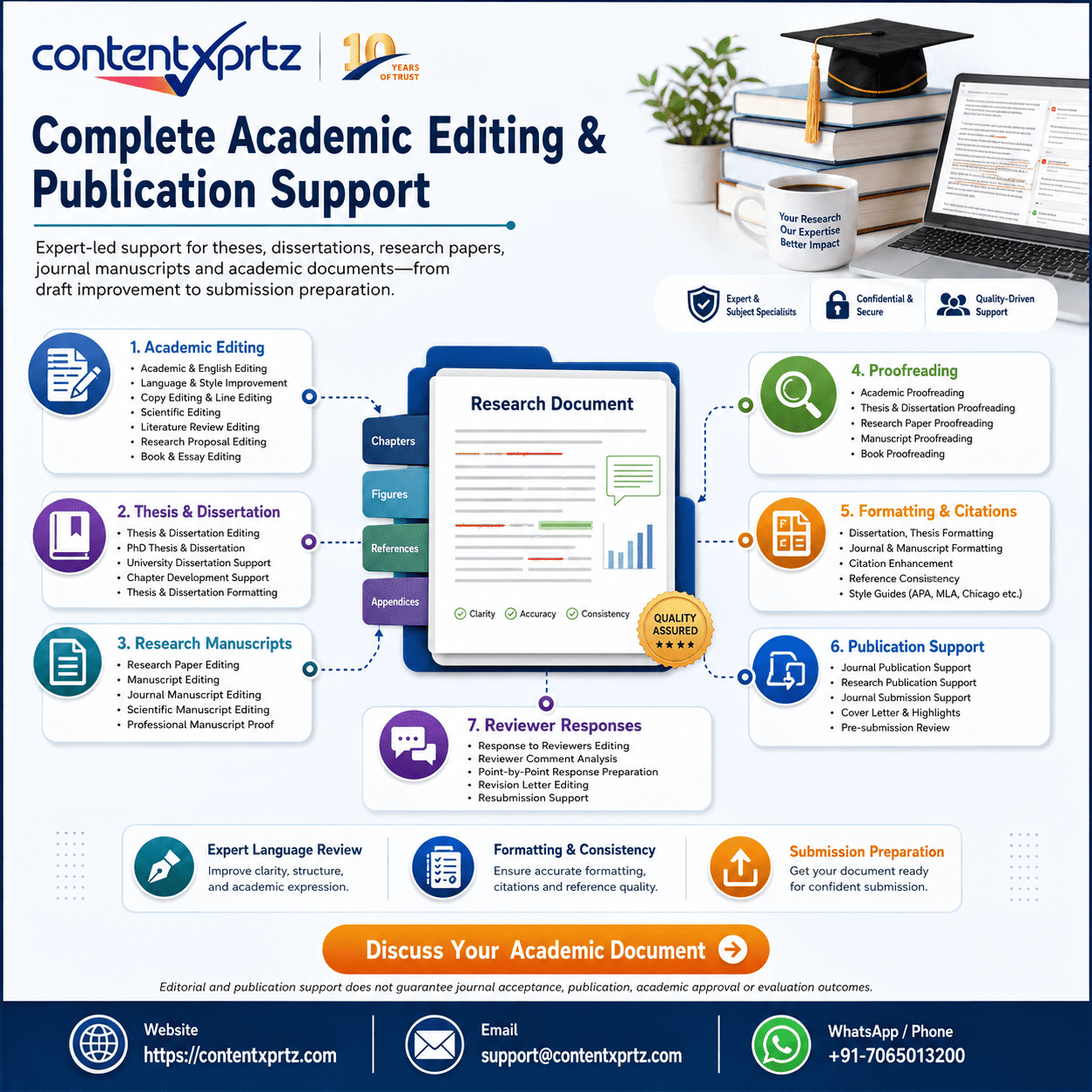
Contentxprtz provides ethical research paper editing services for authors who want clearer language, stronger structure, consistent formatting, and publication-ready presentation. Editing does not guarantee acceptance, indexing, citation impact, or publication; conference decisions remain with the organisers and reviewers.
Summary: Do Conference Papers Count as Publications?
Conference papers count as publications when the written paper has been formally published in proceedings or another archival scholarly venue. A conference appearance by itself is not a publication. Published abstracts can count as published outputs, but they should normally be distinguished from full papers. Posters and oral talks are best listed as presentations unless a separate published record exists.
Peer review, DOI assignment, database indexing, and institutional credit are separate questions. A rigorous peer-reviewed proceedings paper may be highly important in one discipline, while another institution may prioritise journal articles for formal evaluation. The most defensible approach is to describe exactly what was published, where it was published, how it was reviewed, and what category the evaluator asks you to report.
Frequently Asked Questions
Do conference papers count as publications?
Yes, a conference paper generally counts as a publication when the full paper is formally published in conference proceedings, a proceedings journal, or another identifiable archival publication. A conference presentation by itself is not automatically a publication. The safest approach is to check whether the work has a published record with bibliographic details such as a proceedings title, publisher, pages or article number, and often a DOI.
Does a conference paper count as a peer-reviewed publication?
Sometimes. Many reputable conferences peer review full papers before acceptance, especially in fields such as computer science and engineering, but review depth and selectivity vary. Publication status and peer-review status are separate questions, so describe the item accurately rather than assuming every conference paper is peer reviewed.
Do conference abstracts count as publications?
A conference abstract can be a published item when it appears in an abstract book, proceedings supplement, journal supplement, or other permanent record. However, many institutions distinguish a published abstract from a full paper. On a CV, it is often clearer to place abstracts in a separate “Conference abstracts” or “Abstracts and presentations” section.
Does presenting at a conference count as a publication?
Not necessarily. An oral presentation, invited talk, poster, panel contribution, or workshop presentation is scholarly activity, but it is only a publication if a corresponding paper, abstract, or other work was formally published. Presentations can still be valuable and should often be listed under presentations rather than publications.
Do poster presentations count as publications?
A poster presentation is normally treated as a presentation, not a full publication. If the poster abstract was formally published in a proceedings volume or journal supplement, the abstract may count as a published conference abstract. Keep the poster and the published abstract clearly distinguished.
How should I list a conference paper on my academic CV?
List a formally published conference paper under a heading such as “Conference Papers,” “Peer-Reviewed Conference Proceedings,” or “Publications,” depending on your discipline and institutional convention. Include authors, year, title, conference or proceedings title, location if relevant, publisher, page range or article number, DOI, and publication status. Keep presentations without a published paper in a separate section.
Are conference papers as valuable as journal articles?
Their academic weight depends strongly on discipline, venue quality, review process, selectivity, and career context. In some computing and engineering fields, top archival conference proceedings are major research outlets. In many biomedical, social science, and humanities contexts, journal articles usually carry more weight in formal research assessment.
Do conference proceedings count for PhD applications or academic promotion?
They may count, but the evaluation rules are institution-specific. Committees can distinguish full peer-reviewed proceedings papers from abstracts, posters, workshops, and non-archival presentations. Before relying on a conference item for an application, promotion case, annual review, or funding dossier, check the written criteria used by that institution or funder.
Does a DOI prove that a conference paper is a publication?
A DOI is strong evidence that the work has a persistent published record, but it is not the only way a publication can be identified and it does not by itself prove peer-review quality. Some legitimate proceedings use ISBNs, article numbers, repository records, or publisher-specific identifiers instead.
Can I publish an extended journal article after a conference paper?
Often yes, if the journal and conference policies allow it and the journal submission contains substantial new material rather than duplicate publication. Authors should disclose the earlier conference version, cite it where appropriate, explain what is new, and follow the target journal’s originality and copyright policies.
Are conference papers indexed in Scopus or Web of Science?
Some are and some are not. Indexing depends on the conference series, proceedings publisher, database coverage, year, and document type. Never infer indexing from the conference name alone; verify the specific proceedings title and year in the relevant database or official source.
What is an archival conference paper?
An archival conference paper is intended to become part of a permanent scholarly record, usually through formally published proceedings or a digital library. Archival publication commonly includes stable bibliographic metadata and may include a DOI. Non-archival talks, posters, or extended abstracts may be shared with attendees or online without being treated as permanent full-paper publications.
Conclusion: Count the Published Work, Not Just the Conference Appearance
When deciding whether a conference paper belongs in your publication record, start with the formal written output. If the full paper appears in recognised proceedings or another stable scholarly publication, it normally counts as a conference publication. If you only presented the work, call it a presentation. If an abstract was published, label it as a conference abstract. This simple classification keeps your CV accurate and makes it easier for supervisors, hiring committees, universities, funders, and collaborators to understand your research experience.
For authors preparing a conference manuscript or an expanded journal version, careful editing can improve clarity and consistency while preserving your intellectual contribution. Explore Contentxprtz research paper editing support when you need language, structure, formatting, or publication-readiness assistance.