DrillBit Plagiarism: How to Read Similarity Reports and Reduce Risk Ethically
DrillBit plagiarism checks are increasingly part of thesis, dissertation, research-paper, and institutional academic-integrity workflows, especially in Indian higher education. The most important point for a student or researcher is that a DrillBit similarity score is not the same thing as a plagiarism verdict. It is a text-overlap signal that must be interpreted by looking at the matched passages, matched sources, exclusions used for the report, citation practice, and the rules of the university or journal.
A scholar can receive a noticeable similarity score even when some matches are legitimate: references, correctly quoted wording, common technical language, a methods description, an institutional name, or text from the author’s own earlier work may all contribute. The opposite is also possible: a document can have a modest overall percentage while still containing one serious unattributed passage. That is why responsible review focuses on where the matches occur and why, not only on the headline number.
This guide explains how DrillBit similarity checking works in practical terms, how to read the report, how exclusion settings affect the result, what India’s UGC plagiarism framework says about similarity levels, and how to reduce plagiarism risk without damaging meaning or trying to trick detection software. It is designed for PhD scholars, postgraduate students, supervisors, researchers, and authors preparing academic work for submission.
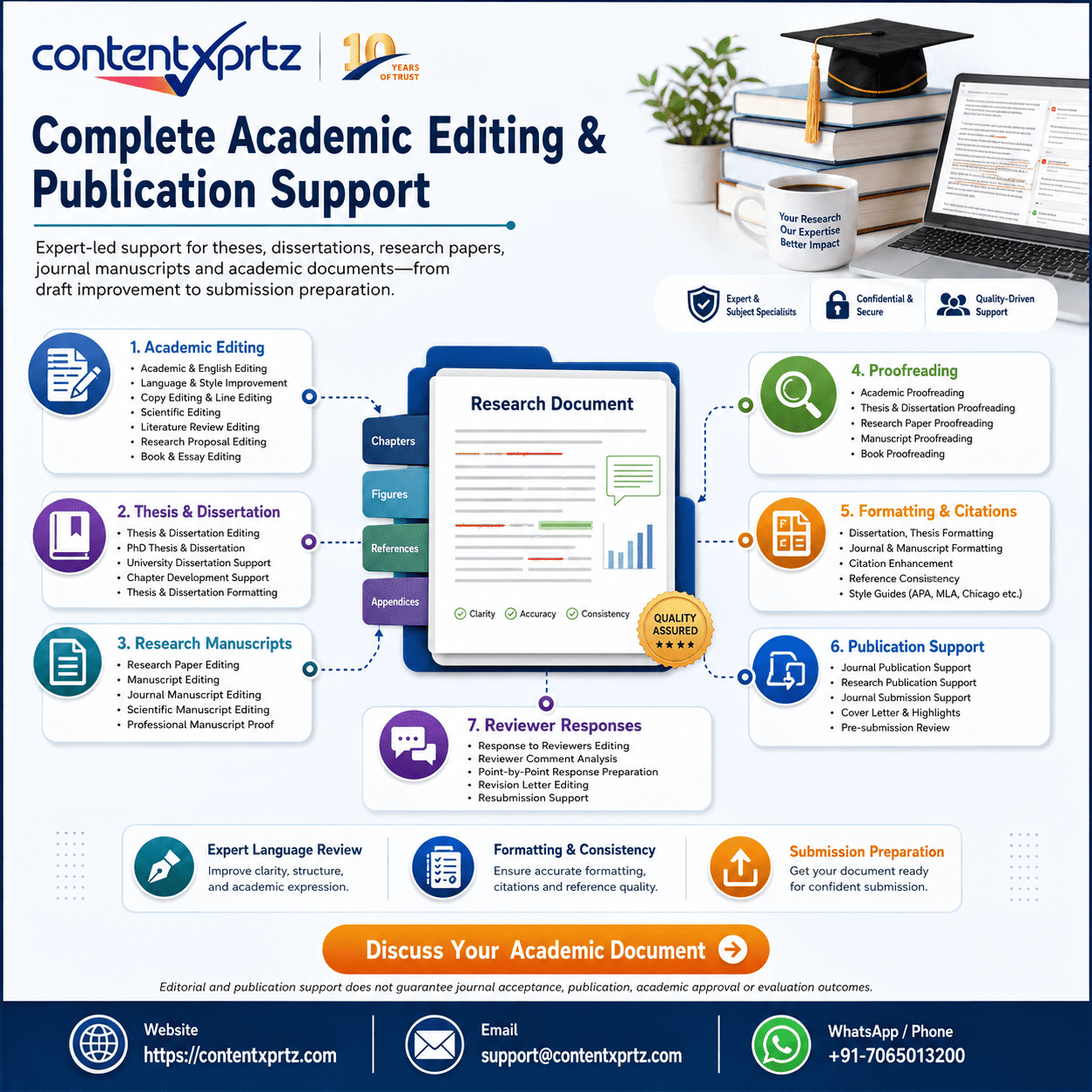
Where a document needs deeper review, Contentxprtz can assist with ethical plagiarism and publication support, citation consistency, academic editing, and clarity. The purpose is to improve attribution and writing quality while preserving the author’s own research and intellectual responsibility.
Quick Answer: What Does DrillBit Plagiarism Checking Actually Show?
DrillBit compares submitted text against the databases selected for the check and generates a similarity report showing an overall percentage, matched sources, and highlighted passages. Its current guidance describes comparison options that can include student papers, journals and publishers, and internet or web sources. It also provides exclusion controls for references or bibliographies, quotations, small sources, and specified phrases.
The score therefore depends partly on the document and partly on the settings. A 15% report with references included is not automatically more problematic than a 9% report with references excluded. The right question is: Which passages match, what are the sources, is the wording properly attributed, and what rules apply to this submission?
For Indian higher education, the UGC’s 2018 regulations provide similarity levels for Masters and research work, but they also require institutional processes and exclusions. Treat the university’s current instructions, supervisor guidance, and formal plagiarism-verification procedure as the controlling requirements for your submission.
Key Takeaways
- A DrillBit similarity percentage measures detected text overlap; it does not independently establish plagiarism.
- Always inspect the highlighted passages and source list instead of reacting only to the overall score.
- Report settings matter because references, quotations, short sources, and phrases can be excluded.
- DrillBit’s A–D grades are software labels; institutional academic-integrity rules determine what is acceptable.
- UGC 2018 describes similarities up to 10% as Level 0 minor similarities, but local submission rules and exclusions still matter.
- Ethical revision means better attribution, genuine paraphrasing, accurate quotation, and stronger original analysis—not evasion of detection.
- Keep the original and revised reports when your institution requires an audit trail or plagiarism certificate.
What This Page Covers
- What DrillBit checks and what its similarity percentage means
- How to read matched sources, highlighted passages, grades, and exclusions
- How DrillBit settings can change the reported similarity
- How UGC similarity levels relate to thesis and dissertation review
- Why legitimate material can appear as a match
- A step-by-step ethical process for reducing problematic similarity
- What to do when a report appears inaccurate or flags self-reuse
Table of Contents
Methodology and Academic Sources
This article uses current DrillBit documentation for similarity reports and file settings, the official DrillBit platform description, INFLIBNET’s ShodhShuddhi information, and the University Grants Commission’s 2018 academic-integrity regulations. DrillBit’s guidance explains report grades and exclusion controls, while INFLIBNET confirms the use of DrillBit-Extreme under the ShodhShuddhi programme for participating higher education institutions.
Official references include the DrillBit similarity-report guide, DrillBit file settings guide, INFLIBNET ShodhShuddhi portal, and the UGC regulations directory. Institutions may update workflows and software settings, so authors should verify the current requirements that apply to their own submission.
What Is DrillBit Plagiarism Checking in an Academic Context?
DrillBit is best understood as a similarity-detection and content-integrity platform. It compares a submitted document with selected collections and identifies passages that resemble material found elsewhere. The resulting report helps a reviewer locate overlaps that may deserve closer attention.
The distinction between similarity and plagiarism is fundamental. Similarity is a technical observation: two texts contain matching or closely overlapping wording. Plagiarism is an academic-integrity judgement involving improper presentation of another person’s work or ideas as one’s own. Software can support that judgement by finding potential source overlap, but context remains essential.
Consider a thesis chapter containing the sentence “The study was approved by the institutional ethics committee.” That phrase may appear in many papers because it is conventional academic language. A software match does not automatically make it misconduct. By contrast, a unique paragraph copied from another author without quotation or attribution can be serious even if it contributes only a small fraction to the overall score.
| Question | Similarity report answers | Human academic review answers |
|---|---|---|
| Does wording overlap with another source? | Yes, this is the software’s core task. | Reviewer confirms context and significance. |
| Is the source properly cited? | May show the source, but cannot fully judge citation adequacy. | Reviewer checks attribution and citation style. |
| Is a quotation legitimate? | Can include or exclude quoted text depending on settings. | Reviewer checks quotation marks, citation, and necessity. |
| Is reuse of the author’s own text acceptable? | Can identify the overlap. | Policy determines whether disclosure or citation is required. |
| Has plagiarism occurred? | No automatic score can settle this alone. | Institutional academic-integrity process determines the outcome. |
How to Read a DrillBit Similarity Report Without Panicking
Start with the overall score, but do not stop there. DrillBit’s current report guide describes a PDF that presents submission information, result information, exclusion information, database selection, a headline similarity percentage, matched sources, and highlighted content. The report is useful because it lets you move from a broad number to the specific text behind that number.
1. Check the similarity percentage and grade
DrillBit currently presents four report grades: A at 0–10%, B at 11–40%, C at 41–60%, and D at 61–100%. These grades make the report easy to scan. However, they are not a substitute for your university’s policy. A software grade is a reporting convention; an institution decides whether a thesis can proceed, needs revision, or requires formal review.
2. Review the matched-source list
Look for concentration. Twenty tiny matches spread across standard phrases may be less concerning than one source accounting for a large block of continuous wording. Ask whether the top source is a journal article, website, student paper, repository copy, your own previous work, or a source that you actually cited.
3. Read the highlighted passages in context
For every meaningful match, open enough surrounding text to understand what happened. Was the passage quoted? Was it paraphrased too closely? Is it a title, method name, standard definition, or technical expression that cannot be changed without losing precision? Is the match inside the bibliography? The reason behind the overlap determines the correct response.
4. Check the report settings
A useful interpretation requires knowing which exclusions and databases were active. If references were not excluded, the bibliography may inflate similarity. If student papers were not compared, the report cannot be treated as evidence that no overlap exists with that collection. The settings are part of the result, not an administrative detail.
Which DrillBit Exclusions Can Change the Similarity Score?
DrillBit provides several controls that can change which matches contribute to the final report. The correct setting depends on institutional policy, so students should not alter exclusions merely to obtain a lower number. Instead, use the settings specified by the supervisor, library, research office, or plagiarism-verification unit.
| Setting | What it does | Academic caution |
|---|---|---|
| Exclude Reference / Bibliography | Removes bibliographic content from similarity calculation. | Useful when the institution permits it; references naturally repeat published metadata. |
| Exclude Quotes | Ignores text inside quotation marks for the similarity calculation. | A quotation still needs accurate citation and should be used only when appropriate. |
| Exclude Small Sources | Omits matches below a chosen word threshold. | Helps reduce noise from common short phrases; threshold should follow institutional settings. |
| Exclude Phrases | Ignores specified recurring phrases. | Should be used for legitimate standard wording, not to conceal unattributed copying. |
| Database selection | Controls comparison with student papers, journals/publishers, internet/web, or other available repositories. | The coverage selected affects what can be detected. |
DrillBit’s documentation notes that exclusion behaviour can differ for some regional-language uploads. When a thesis contains more than one language, ask the institution how the report should be configured and interpreted.
DrillBit Plagiarism and UGC Similarity Levels: What Indian Researchers Should Know
India’s UGC 2018 regulations on promotion of academic integrity and prevention of plagiarism define similarity levels that are widely referenced in higher education. For thesis and dissertation submissions, the regulations describe Level 0 as similarities up to 10%, Level 1 as above 10% to 40%, Level 2 as above 40% to 60%, and Level 3 as above 60%. The regulations also establish institutional procedures and penalties after plagiarism is determined.
These percentages should not be reduced to a simplistic rule such as “anything below 10% is safe.” The regulation separates similarity from the process of establishing plagiarism, and institutions may require particular exclusions, certificates, supervisor declarations, or revised reports. In addition, a single improperly copied section can matter even when the total document percentage is low.
| UGC level | Similarity range | Practical reading |
|---|---|---|
| Level 0 | Up to 10% | Minor similarities under the regulation; still review matches and follow institutional rules. |
| Level 1 | Above 10% to 40% | Material revision may be required if plagiarism is established. |
| Level 2 | Above 40% to 60% | High similarity requiring serious review under the institutional process. |
| Level 3 | Above 60% | Very high similarity and potentially severe consequences if plagiarism is established. |
For the exact legal and institutional consequences, consult the current UGC regulation and your university’s approved academic-integrity policy. Do not rely on screenshots, social-media summaries, or a generic “acceptable percentage” shared by another institution.
Why Can Original or Properly Cited Work Still Be Flagged?
Similarity software can highlight text that is entirely legitimate. This is not necessarily a software error; it reflects the fact that similarity detection works at the level of matching language, while academic integrity depends on context.
- References and bibliographies: article titles, author names, journal names, and citation strings necessarily match published records.
- Direct quotations: correctly quoted text should match the original source because accuracy is the point of quotation.
- Technical terminology: specialised names, formulas, legal language, standard procedures, and instrument descriptions may have limited wording alternatives.
- Methods sections: repeated descriptions of established protocols can produce overlap, especially when authors follow a standard procedure.
- Institutional text: ethics approvals, affiliation names, statutory wording, and standard declarations may be repeated across documents.
- Self-overlap: a thesis chapter based on the author’s published article may match that publication and still require transparent citation or permission.
- Common phrases: short academic expressions can recur across thousands of documents without indicating copying.
Recent public reporting has also shown that researchers can raise concerns when similarity tools appear to flag material they believe is original. The practical lesson is not to dismiss the tool or blindly accept it; document the disputed match, identify the source, compare the texts, and use the university’s review or appeal process.
How to Reduce DrillBit Similarity Ethically: A Step-by-Step Workflow
The safest way to reduce problematic similarity is to improve the scholarship, not to manipulate the score. Work match by match and preserve a copy of the original report so you can explain what changed.
Step 1: Sort matches into categories
Create four groups: legitimate quoted material, bibliography or standard text, acceptable self-reuse requiring disclosure, and passages that are too close to a source. This prevents you from rewriting harmless text while missing the genuinely risky sections.
Step 2: Verify the original source
Open the source itself. Do not paraphrase from a similarity highlight alone because the surrounding context may change the meaning. Record the correct author, year, title, DOI or URL, and page number when needed.
Step 3: Decide whether to quote, paraphrase, or remove
Use a direct quotation when the exact wording has analytical value or cannot be improved without losing meaning. Use a paraphrase when the idea matters more than the original phrasing. Remove material that adds no value or simply repeats background information already covered elsewhere.
Step 4: Paraphrase from understanding
Read the source, close it, write the idea in your own conceptual structure, then reopen the source to verify accuracy. Change more than individual words: alter the sentence structure, emphasis, order of ideas, and level of synthesis while retaining the correct meaning. Cite the source because paraphrasing does not remove the need for attribution.
Step 5: Add your own analytical contribution
A literature review should compare, contrast, evaluate, and connect sources. Instead of writing one sentence per paper, group studies by theme, method, population, finding, or disagreement. Synthesis naturally reduces dependence on source wording while improving academic value.
Step 6: Recheck citations and quotation marks
Ensure that every borrowed idea has attribution and every verbatim phrase is quoted according to the required style. A citation placed at the end of a long paragraph may be ambiguous if several sources contribute to different claims.
Step 7: Run the authorised recheck
Use the institution’s prescribed settings and repository procedure. If resubmission is limited, do not waste attempts on cosmetic edits. Compare the new report with the original and confirm that substantive risk has decreased rather than merely shifting percentages.
Practical Examples: What to Change and What Not to Change
Example 1: Close paraphrase
Risky version: A sentence keeps the source’s structure and replaces only a few words with synonyms. Even with a citation, the writing may be too dependent on the original expression.
Better approach: Identify the core claim, combine it with a second relevant source if appropriate, explain the implication for your own research question, and cite the evidence. The result should sound like your analysis rather than a disguised version of someone else’s sentence.
Example 2: Standard methods language
If a procedure has a conventional name, do not distort the terminology merely to lower similarity. Keep necessary technical terms, cite the method or protocol, and rewrite only the surrounding explanatory language where originality is possible.
Example 3: Your published article appears as a source
Do not assume that being the original author makes unrestricted reuse automatically acceptable. Identify the relationship between the thesis and publication, cite your prior work where required, check publisher copyright or licence terms, and follow any university process for excluding self-published material.
Example 4: Reference list produces many matches
Do not delete citations to obtain a lower score. Verify whether the approved report setting excludes the bibliography. If it does, rerun or ask the authorised administrator to apply the correct setting. Removing legitimate references would increase academic-integrity risk rather than reduce it.
What Not to Do When a DrillBit Score Is High
High similarity can create deadline pressure, but shortcuts often make the academic problem worse. Avoid any tactic designed only to defeat software.
- Do not replace every word with a thesaurus synonym while keeping the source’s sentence structure.
- Do not insert hidden characters, white text, images of text, unusual spacing, or formatting tricks.
- Do not translate copied material into another language and present it without attribution.
- Do not delete valid citations or references because they increase the score.
- Do not cite a source you have not read simply because it appears in a matched-source list.
- Do not fabricate references or invent page numbers.
- Do not assume an AI paraphraser makes copied ideas yours.
These practices can create new integrity issues, reduce readability, introduce factual errors, and undermine the defensibility of the thesis or manuscript.
DrillBit Plagiarism Pre-Submission Checklist
Before the first check
- Confirm the university or journal’s required plagiarism-checking procedure.
- Use the final or near-final document version, not a fragmented draft, unless instructed otherwise.
- Ensure all direct quotations are visibly marked and cited.
- Check that every paraphrased idea has appropriate attribution.
- Verify the bibliography against in-text citations.
When reading the report
- Record the overall score, report date, and settings.
- Review the highest-contributing sources first.
- Inspect continuous matched passages, not only isolated phrases.
- Separate references, quotations, technical language, self-overlap, and problematic copying.
- Confirm whether the matched source is the original or a secondary copy.
During revision
- Paraphrase from understanding rather than by replacing words.
- Use quotations when exact wording is genuinely necessary.
- Add synthesis and your own analytical connection between sources.
- Keep technical terms when precision requires them.
- Preserve evidence of any approved self-work exclusion.
Before final submission
- Run the authorised recheck using required settings.
- Compare changed passages with the original sources.
- Check that the revision did not alter scientific or legal meaning.
- Save the final report and certificate if required.
- Obtain supervisor or institutional clearance through the formal process.
How Contentxprtz Can Help With Plagiarism-Risk Reduction
Professional editing can be useful when the report reveals many close paraphrases, inconsistent citations, unclear source attribution, or language problems that make original writing difficult to express. Contentxprtz can help authors review highlighted passages, improve academic paraphrasing, check citation consistency, strengthen transitions and synthesis, and prepare a cleaner manuscript for an authorised recheck.
The service should not be used to hide copied text or guarantee a particular similarity percentage. A responsible editor works from the author’s genuine research and authentic sources, flags passages requiring verification, and preserves technical meaning. The researcher remains responsible for deciding what evidence to use, reading the sources, approving the interpretation, and complying with university or publisher policy.
For thesis, dissertation, and manuscript support, see Contentxprtz plagiarism and publication services.
Summary: DrillBit Plagiarism Reports Should Be Interpreted, Not Chased
DrillBit is useful because it shows where a document overlaps with other material and helps institutions create a review trail. The percentage, grade, matched-source list, highlighted text, exclusion settings, and databases selected all contribute to understanding the result.
The safest academic response is source-based: inspect the match, verify the original, decide whether quotation or paraphrasing is appropriate, cite correctly, and strengthen your own synthesis. In India, researchers should also read the UGC 2018 framework together with their university’s current plagiarism-verification rules rather than treating a single percentage as a universal pass mark.
A lower number is not the real goal. The goal is a thesis or manuscript in which borrowed ideas are transparent, wording is genuinely yours where it should be, quotations are accurate, citations are traceable, and the argument reflects your own scholarly contribution.
Frequently Asked Questions
What is DrillBit plagiarism software?
DrillBit is a plagiarism and content-integrity platform used by universities and other organisations to compare submitted documents with selected databases and generate similarity reports. In India, INFLIBNET provides DrillBit-Extreme to participating higher education institutions through the ShodhShuddhi programme. A similarity report identifies matching text and sources; it does not by itself prove academic misconduct.
What does the DrillBit similarity percentage mean?
The similarity percentage is the proportion of text that DrillBit identifies as overlapping with material in the databases selected for the check, after the active exclusions are applied. It is a screening signal, not a plagiarism verdict. Review the matched passages, sources, citations, quotation marks, bibliography treatment, and institutional rules before deciding whether revision is needed.
What are the DrillBit similarity grades?
DrillBit guidance currently presents four headline grades: A for 0–10%, B for 11–40%, C for 41–60%, and D for 61–100%. These software grades are convenient report labels. They should not be treated as universal academic penalties because universities, journals, disciplines, and national regulations can apply different rules and exclusions.
Is 10% similarity always acceptable in a thesis?
No. Under India’s UGC 2018 plagiarism regulations, similarities up to 10% are described as Level 0 minor similarities with no penalty, but the regulation also specifies exclusions and institutional processes. A university may impose additional submission requirements, and even a low overall score can contain an improperly copied passage. Always follow the current rules of the relevant institution.
Why can references and quotations increase a DrillBit score?
References, bibliographies, direct quotations, standard phrases, and previously submitted material can create legitimate text matches. DrillBit provides settings for excluding references or bibliographies, quotations, small sources, and specified phrases. The report should therefore be interpreted together with the exclusion settings used for that particular check.
How can I reduce DrillBit similarity ethically?
Read each highlighted match, identify whether it is a quotation, citation, common phrase, self-overlap, or close paraphrase, and revise only where academic writing requires it. Cite the original source, quote distinctive wording when necessary, paraphrase from understanding rather than by word substitution, and add your own analysis. Do not use synonym-spinning, hidden characters, translation tricks, or other methods intended to defeat detection.
Can DrillBit detect AI-generated writing?
DrillBit markets AI-content detection alongside plagiarism and similarity analysis. An AI indicator should be treated as a separate signal from text similarity and interpreted under the institution’s policy. Automated AI detection can have limitations, so academic decisions should include human review and clear evidence rather than relying on a single score.
What should I do if DrillBit flags my own published work?
Check whether the matched source is genuinely your prior work and whether reuse is permitted. Self-reuse may still require citation, quotation, disclosure, or permission depending on the document and publisher. If the institution allows exclusions for previously submitted or self-published material, follow its formal procedure rather than deleting citations or trying to hide the match.
Does a DrillBit report prove plagiarism?
No. Similarity-detection software identifies text overlap. Plagiarism is an academic judgement about unattributed or improper use of another person’s words, ideas, or work. Human review is necessary to distinguish misconduct from correctly quoted material, references, standard terminology, legitimate reuse, and other non-problematic matches.
When can professional plagiarism-risk support help?
Professional support can help when a thesis, dissertation, manuscript, or research paper has complex similarity matches and the author needs ethical paraphrasing guidance, citation checks, language editing, or a structured pre-submission review. The author should remain responsible for the research, source reading, interpretation, citations, and final submission decisions.
Conclusion: Use DrillBit as an Academic-Integrity Diagnostic Tool
A DrillBit report is most valuable when it prompts better academic decisions. Instead of trying to make every highlight disappear, ask whether each borrowed idea is acknowledged, each quotation is necessary, each paraphrase is genuinely rewritten from understanding, and each source is represented accurately.
When a report is unexpectedly high, work systematically from the largest and most meaningful matches. When it is low, still inspect the content for isolated high-risk passages. Follow the institution’s authorised settings, UGC or local policy where applicable, and any required supervisor or library verification process.
Contentxprtz supports ethical academic editing, citation review, and plagiarism-risk reduction for researchers who need help turning a similarity report into a clearer, more defensible manuscript. At Contentxprtz, we don’t just edit; we help ideas reach their fullest potential.