Should You Consider the Journal of Hospitality and Tourism Management?
If your manuscript addresses a substantive management question in hospitality or tourism, Journal of Hospitality and Tourism Management may deserve close evaluation. The supplied source record identifies it as an Elsevier journal with ISSN 1447-6770 and Scopus Source ID 21100255484, classified within Social Sciences and Business, Management and Accounting. Those identifiers are useful because they help researchers locate the correct source record rather than relying on a similarly named title.
Indexing alone is not a journal-selection strategy. A publishable paper still needs to speak to the journal’s readership, fit its current aims and scope, follow the current Guide for Authors, and make a defensible scholarly contribution. A tourism setting does not automatically create fit; the research question should matter to hospitality or tourism management as a field.
This guide separates supplied or directly identifiable journal facts from practical publication guidance. Because journal metrics, editorial teams, access models, charges and review information can change, any value not independently verified here is marked for confirmation rather than estimated.
Quick Answer: What Is Journal of Hospitality and Tourism Management?
Journal of Hospitality and Tourism Management is a scholarly journal published by Elsevier for research in hospitality and tourism management. The supplied Scopus record gives Source ID 21100255484, ISSN 1447-6770, and subject coverage in Social Sciences and Business, Management and Accounting.
Researchers may consider it when their study contributes directly to hospitality or tourism management theory, evidence, policy or practice. Before submission, confirm the current official aims and scope, Guide for Authors, current Scopus status and any fees or open-access options.
Key Takeaways for Researchers
- Publisher: the supplied source record lists Elsevier.
- Scopus identifier: Source ID 21100255484 is supplied for this journal.
- ISSN: 1447-6770 is supplied and should be used with the title and publisher when verifying the journal.
- Core field: hospitality and tourism management, with management and social-science relevance.
- Fit matters more than indexing: the paper should make a contribution that the journal’s hospitality and tourism readership can use.
- Current metrics are time-sensitive: confirm CiteScore, SJR, SNIP, quartile and any Journal Impact Factor from the applicable official database before citing them.
- Fees and review timelines should not be guessed: use the current journal/publisher pages when planning a submission.
Journal Information at a Glance
The table distinguishes information supplied with the journal record from items that require a fresh check on an official database or journal page.
| Field | Journal information |
|---|---|
| Journal name | Journal of Hospitality and Tourism Management |
| Source type | Journal |
| Publisher | Elsevier (supplied source record) |
| ISSN | 1447-6770 (supplied source record) |
| EISSN | Verify on the current official journal or Scopus record |
| Scopus Source ID | 21100255484 |
| Scopus profile | Open the supplied Scopus source profile |
| Subject areas in supplied record | Social Sciences; Business, Management and Accounting |
| Official journal site | ScienceDirect journal page |
| Publication frequency | Verify current schedule on the official journal page |
| Current Scopus status | Check the live Scopus source profile immediately before relying on it |
| CiteScore / SJR / SNIP / quartile | Current values not independently verified for this page; use the latest applicable database year |
| Journal Impact Factor | Verify in the current official Clarivate source where applicable |
| Open-access model / APC | Verify current options and fee on the journal/publisher site |
| Author guidelines | Official Guide for Authors |
| Submission system | Follow the current submission link exposed by the official journal page; do not rely on an old bookmarked portal |
A university may define “Scopus journal,” “Q1 journal,” “SSCI journal,” or “approved journal” differently. Match the evidence to the rule you actually need to satisfy.
What This Page Covers
- Journal identity and publisher
- Aims, scope and research themes
- Scopus source verification
- Metrics and quartile caution
- Manuscript and article fit
- Author-guideline checks
- Peer-review expectations
- Open access and fees
- Ethics and declarations
- Publication-readiness support
Methodology and Source Note
This profile uses the journal identifiers supplied with the request—title, ISSN, publisher and Scopus Source ID—as the primary identity check. It also points readers to the official journal homepage, official aims and scope, official author guidance, the supplied Scopus source profile, and Elsevier publishing-ethics information.
Freshness principle: metrics, quartiles, indexing coverage, editorial roles, article categories, manuscript instructions, open-access arrangements, APCs and submission links can change. This page therefore does not manufacture a current number or policy where a fresh official value was not independently confirmed.
What Research Is Likely to Fit the Journal’s Scope?
The clearest fit is research in which hospitality or tourism management is central to the research problem, theoretical contribution and intended readership. A paper that merely collects data from hotel guests, tourists or destination employees is not automatically well aligned; the study should explain what the evidence changes for scholarship or management in the field.
Potentially relevant themes include hospitality operations and strategy, tourism management, service and customer experience, destination management, tourism and hospitality marketing, consumer and tourist behaviour, human-resource issues, technology and digital transformation, sustainability, crisis and risk management, entrepreneurship, innovation, policy, governance and the business consequences of changing travel behaviour.
Strong scope signal
The central theory, problem and contribution are framed for hospitality or tourism management, and the literature review engages directly with research in that community.
Weak scope signal
Hospitality or tourism appears only as a convenient sample or context while the paper’s real contribution belongs primarily to another discipline with little sector-specific insight.
Interdisciplinary potential
Work drawing on psychology, economics, information systems, sustainability, geography, marketing or organisational studies may fit when the hospitality/tourism contribution is explicit and substantial.
Practical relevance
Applied implications can strengthen a paper when they arise from rigorous evidence rather than replacing theory, method or analytical depth.
For a real fit assessment, read the official scope statement and then examine recent issues. The recent literature shows what the journal is actually publishing now, including dominant methods, theoretical conversations and the level of contribution editors are selecting.
Is This Journal a Good Match for Your Manuscript?
A good match is a three-way alignment between topic, contribution and reader value. If one of those is weak, an otherwise competent manuscript may be desk-rejected or receive reviews questioning relevance.
| Question | Stronger fit | Possible warning sign |
|---|---|---|
| Research problem | Addresses a meaningful hospitality/tourism management problem | Sector is only a sampling convenience |
| Literature | Engages with recent hospitality/tourism scholarship | Almost all framing comes from an unrelated field |
| Contribution | Changes theory, evidence, method, policy or managerial understanding | Mostly confirms an expected relationship without a clear advance |
| Method | Design and analysis are justified for the question | Method choice is driven by convenience or under-explained |
| Audience | Journal readers can see why the result matters | Implications are generic and could fit any industry |
| Presentation | Concise, transparent and aligned with current author instructions | Important declarations, references or reporting elements are missing |
Examples of Journal-Aligned Research Questions
These examples are not an official list of accepted topics. They show how a broad theme can be reframed into a hospitality- or tourism-management contribution.
AI and service design
Instead of asking whether customers “like AI,” examine how AI-mediated service changes trust, perceived control, employee roles or service recovery in hotels or tourism services.
Behaviour and operations
Connect sustainability interventions to measurable guest behaviour, operational trade-offs, destination governance or firm performance rather than offering only broad environmental attitudes.
Hospitality employment
Investigate retention, wellbeing, scheduling, skills, leadership or technology adoption with a clear link to hospitality labour conditions and management decisions.
Understanding the Scopus Record and Journal Metrics
The supplied record gives the journal a Scopus Source ID of 21100255484. For researchers, the Source ID is more useful than a screenshot or third-party journal list because it points to the specific database record associated with the title.
However, “indexed in Scopus” and “Q1” answer different questions. Indexing describes source coverage. Quartile is a ranking context tied to a particular year, metric system and subject category. CiteScore, SJR and SNIP also measure different aspects of citation performance. A value should never be copied without its reporting year and source.
Metric caution: this page does not state a numeric CiteScore, SJR, SNIP, quartile or Journal Impact Factor because a current official value was not independently verified during preparation. If a doctoral regulation requires a specific quartile or metric threshold, save the current official evidence used for your decision.
What Does the Journal Publish?
The most reliable answer comes from the current Guide for Authors and recent journal issues. Hospitality and tourism journals may publish several scholarly formats, but authors should not assume that a review, conceptual article, research note, viewpoint, case study or special-issue format is currently accepted unless the official instructions list it.
As a publication-readiness step, identify your intended article category before reformatting. Article type can affect word limits, abstract style, required sections, declarations, data expectations and supplementary files. If your manuscript does not fit an available category, forcing it into the journal’s template is unlikely to solve the underlying mismatch.
Preparing a Manuscript for Submission
Use the current official Guide for Authors as the controlling checklist. General good practice is useful, but it must not be confused with a journal-specific requirement.
- Recheck scope. Write one sentence explaining why the contribution belongs in hospitality or tourism management and compare it with the journal’s current aims.
- Choose the correct article type. Confirm that the journal currently accepts the format you intend to submit.
- Align the title, abstract and keywords. They should accurately express the research question, context, method, main contribution and sector relevance without exaggeration.
- Audit the manuscript structure. Ensure the argument progresses logically from problem and literature to method, results, interpretation and implications where applicable.
- Check reporting transparency. Methods, sampling, measures, analytical choices, limitations and ethics information should allow readers to understand how conclusions were reached.
- Verify references. Every in-text citation should match the reference list; references should be accurate and formatted according to current journal instructions.
- Prepare declarations and files. Follow current requirements for authorship, conflicts, funding, data availability, ethics, figures, tables, supplementary material and cover letter.
What Makes a Hospitality or Tourism Manuscript Publication-Ready?
Publication readiness is more than proofreading. The paper should be easy for an editor to evaluate: the research gap is credible, the contribution is specific, the method is defensible, findings are reported without overclaiming, and implications are proportionate to the evidence.
Pre-submission quality check
- Can a reader identify the paper’s main contribution from the abstract?
- Does the introduction explain why the problem matters specifically to hospitality or tourism management?
- Is the literature review analytical rather than a catalogue of prior studies?
- Are constructs, hypotheses or research questions logically developed?
- Are the research design and analytical procedures sufficiently transparent?
- Do results answer the stated questions without selective reporting?
- Are theoretical and managerial implications distinct and evidence-based?
- Are limitations candid and connected to future research?
- Has every reference, table, figure and supplementary item been checked?
- Does the final package follow the current journal instructions rather than an old template?
What Happens After You Submit a Manuscript?
Authors should expect an editorial suitability check before a paper can progress through the journal’s review process. At that stage, editors may consider scope, contribution, scholarly quality, presentation, ethical compliance and whether the paper is ready to send to reviewers.
The exact current peer-review model should be taken from the official journal information. This page does not label it single-anonymized, double-anonymized or open review without a fresh official statement. Likewise, no acceptance rate or average review duration is estimated here.
If revisions are invited, prepare a structured response that addresses every reviewer and editor point. Explain changes precisely, cite page or line locations where practical, and justify respectfully when a suggestion is not adopted. A response letter is part of the scholarly dialogue, not a marketing document.
Open Access, Publication Fees and APCs
Publication charges are time-sensitive and can depend on the article’s access route, institutional agreements, funder arrangements and publisher policy. For that reason, this page does not quote an APC that could become stale or mislead authors.
Before submission, use the official journal and Elsevier pages to confirm whether the article can be published under a subscription route, an open-access route, or another current arrangement; whether an APC applies; the currency and tax treatment; and whether any institutional agreement or waiver policy is relevant. Do not pay a fee based only on an email, third-party directory or unofficial invoice.
Publication Ethics and Author Responsibilities
Authors should follow the journal’s current ethics and declaration requirements as well as the publisher’s applicable policies. Elsevier provides publishing-ethics guidance covering responsible authorship and research publication practices.
At a minimum, submit work that accurately represents the research performed. Do not fabricate data, manipulate images or analyses deceptively, create fake citations, use undisclosed authorship arrangements, submit the same manuscript simultaneously where prohibited, or attempt to influence peer review through false reviewer identities. Disclose conflicts, funding, ethics approval and use of tools or assistance when required by the current policy.
Professional editing can improve language and presentation, but the named authors remain responsible for the scholarship, evidence, interpretations, citations, authorship and final submission.
Why a Manuscript May Be Rejected Before or After Review
Rejection does not always mean the research is poor. A paper can be unsuitable because it is out of scope, its contribution is too limited for the journal, the evidence does not support the claims, the method is insufficiently justified, or the manuscript is not ready for efficient evaluation.
- Scope mismatch: hospitality or tourism is peripheral to the actual contribution.
- Unclear novelty: the paper does not explain what changes relative to existing research.
- Weak conceptual framing: hypotheses or questions are disconnected from theory and evidence.
- Methodological concerns: design, measurement, sampling or analysis cannot support the inference claimed.
- Overclaiming: managerial or policy conclusions extend beyond the data.
- Presentation barriers: poor structure, language or formatting makes the research difficult to assess.
- Ethics/compliance gaps: required declarations, approvals or authorship information are missing or unclear.
Is the Journal Suitable for PhD Scholars and Early-Career Researchers?
It can be, provided the manuscript is genuinely competitive for the journal. Doctoral status neither qualifies nor disqualifies a submission. The important questions are whether the study belongs in the journal, whether the contribution is strong enough, and whether the paper meets the current editorial and reporting expectations.
If your programme requires a Scopus-listed publication or a specific quartile, obtain the current evidence before submitting. Some institutions judge the status at submission, acceptance, publication or thesis filing; others use a specific database year. Confirm the rule with your institution instead of assuming that one screenshot will satisfy every requirement.
How Contentxprtz Can Support Publication Readiness
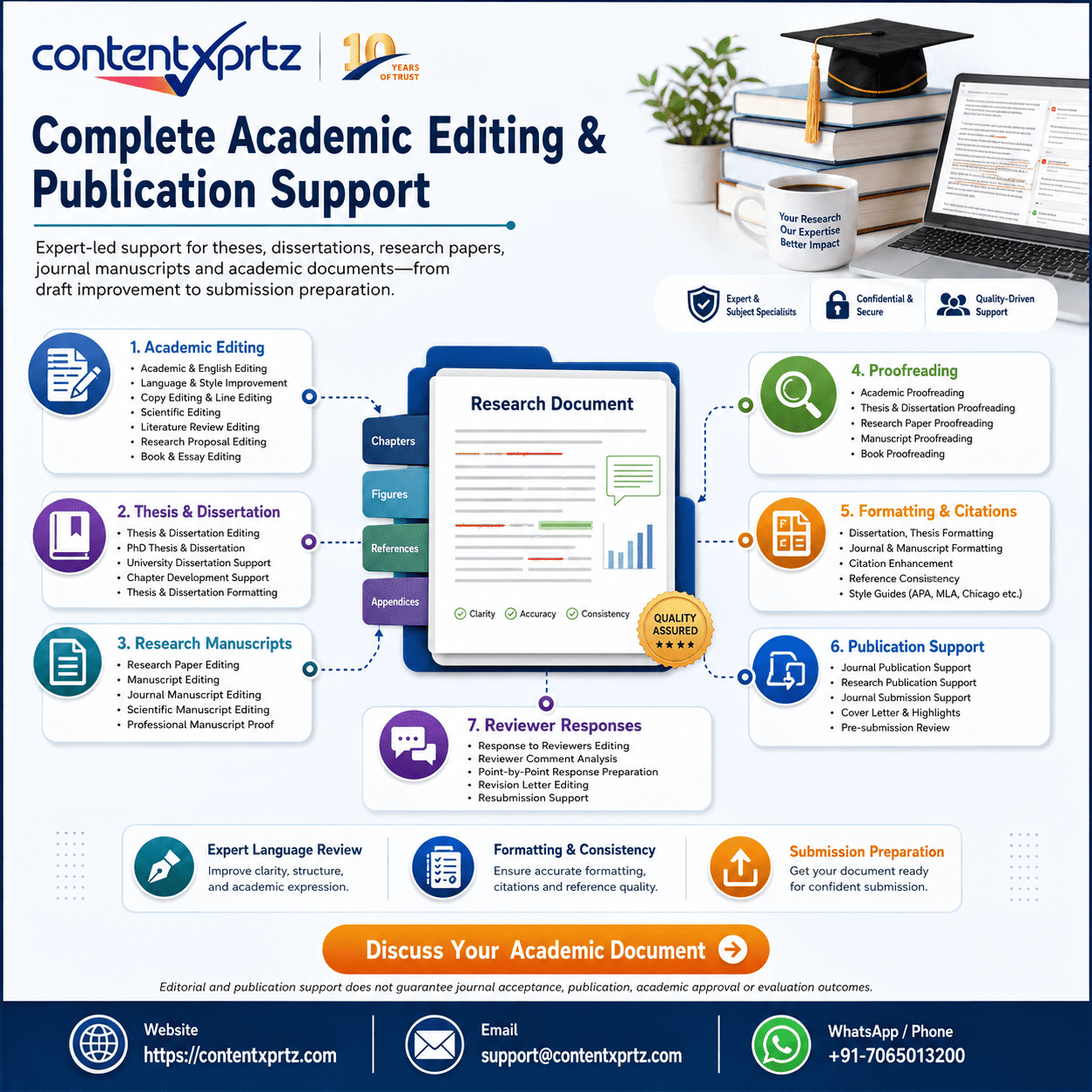
Contentxprtz can support researchers after the journal-fit decision has been made or while they are comparing a small set of realistic journals. Ethical support may include manuscript assessment, academic editing, proofreading, journal formatting, reference and citation checks, cover-letter editing, reviewer-response editing, and a pre-submission check against visible journal requirements.
The service should strengthen communication without changing ownership of the research. Contentxprtz does not guarantee acceptance, claim influence over editors, manufacture citations or data, write deceptive reviewer responses, or promise a particular metric or publication outcome.
Preparing a manuscript for Journal of Hospitality and Tourism Management?
Use professional support to improve clarity, structure, formatting and publication readiness while keeping the research and final decisions under the authors’ control.
Summary: How to Evaluate Journal of Hospitality and Tourism Management
Journal of Hospitality and Tourism Management is identified in the supplied source record as an Elsevier journal with ISSN 1447-6770 and Scopus Source ID 21100255484, within Social Sciences and Business, Management and Accounting. Researchers working on hospitality or tourism management should evaluate the journal first through scope and recent published work, then through current author instructions and institutional requirements.
Do not select the journal on indexing or a remembered quartile alone. Confirm the live Scopus record, current metrics, any applicable Journal Impact Factor, current article types, review information, open-access options, APCs and submission links using the official sources available at the time you submit.
A strong submission is journal-aligned, methodologically defensible, transparently reported and carefully prepared. Editing and publication-readiness support can help improve the presentation of that work, but acceptance remains an editorial decision.
Questions About Journal of Hospitality and Tourism Management
These answers focus on the practical questions researchers commonly ask when checking Scopus status, scope, metrics, fees and submission readiness.
Is Journal of Hospitality and Tourism Management indexed in Scopus?
The supplied Scopus source record identifies Journal of Hospitality and Tourism Management as Source ID 21100255484, with ISSN 1447-6770 and Elsevier as publisher. Researchers whose university or doctoral programme requires a Scopus-listed outlet should still open the current Scopus source profile immediately before submission, because database coverage and source status can change.
What is the Scopus Source ID for Journal of Hospitality and Tourism Management?
The supplied source record gives Scopus Source ID 21100255484. Use the Source ID together with the journal title, ISSN 1447-6770, and Elsevier publisher information to distinguish the correct journal from similarly named publications.
Who publishes Journal of Hospitality and Tourism Management?
The supplied journal record lists Elsevier as the publisher. The official journal site is hosted on ScienceDirect, Elsevier’s journal platform. Authors should use the official journal and publisher pages for current policies, author instructions, submission links, fees, and editorial information.
What subjects does Journal of Hospitality and Tourism Management cover?
The journal focuses on hospitality and tourism management. Suitable research can include management, marketing, consumer and tourist behaviour, destination and experience management, service operations, strategy, technology, sustainability, human resources, policy, and related business and social-science questions when they are clearly connected to hospitality or tourism.
Is Journal of Hospitality and Tourism Management Q1?
A quartile should be reported only with its database, year, and subject category. This page does not state a current quartile because a current official quartile value was not independently verified during preparation. Check the latest Scopus source profile and the metric source required by your institution before using a Q1, Q2, Q3, or Q4 label in an academic or administrative decision.
What is the current CiteScore, SJR, SNIP, or Impact Factor?
Journal metrics change by reporting year. This page deliberately does not provide a numeric CiteScore, SJR, SNIP, or Journal Impact Factor because a current official value was not independently verified during preparation. Verify the latest figures on the current Scopus source page and, for Journal Impact Factor information where applicable, the official Clarivate Journal Citation Reports source available to you.
What types of manuscripts should I consider for this journal?
A manuscript should make a clear contribution to hospitality or tourism management and be presented in a scholarly article format accepted by the journal. Before submission, check the current Guide for Authors for the exact article categories now accepted, because article-type labels and requirements can change. Do not assume that a review, conceptual paper, research note, or case format is accepted unless the current instructions say so.
How do I know whether my manuscript fits the journal?
Start with the research question, contribution, and audience. A strong fit means the paper addresses a hospitality or tourism management problem, engages with literature that the journal’s readers use, and offers a contribution that would matter to that community. Compare your manuscript with several recent articles and read the official aims and scope before deciding.
Where can I find the author guidelines?
Use the journal’s official ScienceDirect Guide for Authors page. It is the controlling source for current manuscript preparation, declarations, file requirements, reference guidance, artwork instructions, and submission information. Requirements may change, so the guide should be checked again immediately before uploading the final files.
Does the journal charge an article processing charge?
Do not rely on an undated third-party fee listing. The current publication model and any open-access article processing charge should be checked on the official journal and Elsevier open-access pages at the time of submission. This article does not state a specific APC because a current official fee was not independently verified during preparation.
What peer-review model does the journal use?
The exact current review model should be confirmed on the official journal page or Guide for Authors. This page does not label the process single-anonymized, double-anonymized, or open review without a current official statement. Authors can nevertheless expect editorial screening before external review when the manuscript is considered suitable for peer review.
How long does peer review or publication take?
An official current average review or publication duration was not independently verified for this page, so no timeline is estimated. Review speed can vary by topic, reviewer availability, revision rounds, and editorial decisions. Use only timelines published by the journal itself, and avoid planning degree or promotion deadlines around an assumed turnaround.
Is the journal suitable for PhD researchers and early-career authors?
Potentially, yes, if the manuscript is a strong match for the journal’s scope and meets its scholarly and methodological expectations. Career stage is less important than the quality, originality, relevance, transparency, and journal fit of the work. PhD scholars should also confirm whether the journal satisfies their university’s current publication rules.
What are common reasons a manuscript may be unsuitable?
A manuscript may be unsuitable when hospitality or tourism is only a superficial setting, the contribution is too generic for the journal’s readership, the research question repeats well-established work without a clear advance, methods are inadequately justified, reporting is incomplete, or the paper does not follow current journal requirements. Scope mismatch can lead to rejection before external review.
Can Contentxprtz guarantee acceptance in Journal of Hospitality and Tourism Management?
No. Contentxprtz can support ethical manuscript preparation through editing, proofreading, formatting, reference checking, journal-fit review, cover-letter editing, and reviewer-response editing. It cannot guarantee acceptance, influence editors or reviewers, manufacture findings or citations, or promise publication. Editorial decisions remain with the journal.
Choose the Journal for Fit, Then Prepare for Its Current Requirements
Journal of Hospitality and Tourism Management may be a strong option when the manuscript makes a clear hospitality or tourism management contribution and speaks directly to the journal’s scholarly audience. Use the supplied Scopus Source ID to verify the correct source, but make the actual journal-selection decision by combining indexing with scope, recent publications, article type and current author instructions.
Immediately before submission, reopen the official pages and confirm anything that can change: metrics, quartile, fees, access options, editorial details, manuscript requirements and submission links. That final check is especially important when a degree, funding agreement, promotion rule or institutional policy depends on a particular journal status.
“At Contentxprtz, we don’t just edit; we help ideas reach their fullest potential.”