IEEE Paper: How to Write, Format, Check and Prepare for Submission
An IEEE paper is a technical research manuscript prepared for an IEEE conference, journal, magazine, or other IEEE publication, using the structure, formatting, citation, authorship, and ethical requirements of the specific publication. For a student or first-time researcher, the difficult part is rarely just making the document “look like IEEE.” A strong paper must communicate a defensible research question, explain reproducible methods, report results accurately, interpret those results without exaggeration, and follow the exact author instructions of the target venue.
That combination creates practical pressure. You may have sound engineering, computing, electronics, telecommunications, robotics, power, data, or applied-science research, but still struggle with a compressed conference page limit, a dense two-column template, unclear figure captions, equations that do not fit, inconsistent references, or an abstract that describes the topic but not the actual contribution. ESL authors may also need to improve grammar and flow without changing technical meaning. PhD scholars may be adapting a larger thesis chapter into a much shorter article. Professionals may be converting an internal technical study into a manuscript that must now satisfy scholarly conventions.
The most reliable approach is to separate four tasks: research quality, paper structure, IEEE-specific formatting, and submission readiness. IEEE’s Author Center advises authors to use the template for the specific publication, structure papers around a clear title, self-contained abstract, introduction, methods, results and discussion, conclusion, acknowledgments where appropriate, and references. It also emphasizes correct citation, original reporting, authorship responsibility, and publication ethics. These are not decorative requirements; they help reviewers understand exactly what was done, why it matters, and whether the claims are supported.
This guide explains how to build an IEEE paper from the research question outward, choose the correct template, write each major section, handle references and figures, avoid common mistakes, and perform a publication-readiness check. Where language, organization, or presentation remains a barrier, ethical academic editing services can improve clarity while leaving the research decisions, data, arguments, and final responsibility with the author.
Quick Answer: What Is an IEEE Paper?
An IEEE paper is a scholarly technical manuscript submitted to an IEEE publication or conference. It is not defined only by a two-column layout. The paper must satisfy the scope, length, template, section, reference, figure, authorship, originality, and submission rules of the exact IEEE venue.
Start by identifying the target conference or journal and downloading its approved template. Then write the paper around the research contribution: a precise title, concise abstract, focused introduction, transparent methods, results, discussion, conclusion, and properly cited references. Do not force thesis-length background into a short conference paper, and do not copy formatting from an unrelated published PDF when an official template is available.
Before submission, check technical content and presentation separately. Confirm that claims match the data, references are authentic and relevant, figures remain readable, equations and symbols are defined, all authors meet authorship requirements, and any use of AI-generated content follows the applicable IEEE policy and venue instructions.
Key Takeaways
- An IEEE paper must follow the instructions of its specific conference or journal; there is no single universal page limit or template for every IEEE venue.
- Use the official IEEE template or the publication-specific template instead of manually recreating margins, columns, fonts, headings, and author blocks.
- The strongest structure moves from problem and gap to method, evidence, interpretation, limitations, and a conclusion supported by the results.
- IEEE conference guidance describes the abstract as a concise, self-contained summary and recommends 3–5 keywords or phrases for discoverability.
- References should support the actual claim being made; irrelevant citation inflation, plagiarism, fabricated references, and unattributed reuse are publication-ethics problems.
- Language editing can improve readability and consistency, but authors remain responsible for the research, data, citations, technical meaning, and final submission.
- Submission readiness requires both intellectual checks and production checks, including template compliance, figure quality, reference verification, and required PDF or LaTeX validation.
What This Page Covers
- What researchers usually mean by “IEEE paper” and how conference and journal papers can differ.
- How to select the correct IEEE template and interpret venue-specific author instructions.
- How to write the title, abstract, introduction, methods, results, discussion, conclusion, and references.
- How to format citations, tables, figures, equations, acronyms, and technical terminology more consistently.
- How to handle authorship, originality, citation ethics, and AI-assisted writing responsibly.
- Common IEEE manuscript mistakes and practical examples from student and researcher workflows.
- A final publication-readiness checklist and exactly what professional editing can and cannot do.
Table of Contents
- Meaning and types of IEEE papers
- Choosing the right venue and template
- Step-by-step IEEE paper writing workflow
- IEEE format, citations, figures and equations
- Ethics, authorship and responsible AI use
- Submission-readiness checks
- Common mistakes
- Practical examples
- IEEE paper checklist
- Frequently asked questions
Methodology and Academic Sources
This guide is based on the current publicly available IEEE Author Center guidance for conference and journal authors, including official material on paper structure, authoring tools and templates, publication ethics, reference preparation, and submission checks. IEEE requirements can differ by publication, society, conference, article type, and year, so the target venue’s author instructions remain the controlling source for a real submission.
For venue-specific decisions, authors should verify requirements on the official conference or journal page and use the relevant IEEE Author Center resources, including IEEE conference authoring tools and templates, IEEE guidance on structuring a conference paper, and IEEE tools for journal authors.
What “IEEE Paper” Means in Academic Publishing
The phrase IEEE paper usually refers to a manuscript written for an IEEE conference or periodical, or a paper already published through an IEEE venue. The content is typically technical or scientific, but the exact article type, page limit, review process, and formatting rules depend on the destination.
A common mistake is to treat “IEEE format” as if it were one fixed visual recipe. IEEE provides templates and author tools, but a conference may impose its own page limit, title block, copyright notice, paper size, PDF requirements, or submission system. A journal may use a different template and may allow a much longer treatment of the work.
Conference paper versus journal article
| Area | IEEE conference paper | IEEE journal article |
|---|---|---|
| Purpose | Communicate a focused contribution for a conference audience and proceedings. | Present a more complete scholarly contribution for a periodical audience. |
| Length | Often tightly constrained; the conference specifies the actual limit. | Varies by journal and article type; can permit more methodological and analytical depth. |
| Template | Use the template and instructions supplied for that conference. | Use the template and author instructions for the target IEEE journal. |
| Background | Compressed to what reviewers need to understand the gap and contribution. | May allow a fuller literature context, depending on the journal. |
| Results | Prioritize the most decision-relevant evidence within the page limit. | May include broader validation, sensitivity analysis, appendices, or supplementary material when allowed. |
| Submission check | May include conference-specific PDF compliance and presentation obligations. | Follows the journal’s submission, peer-review, revision, and production workflow. |
IEEE’s conference Author Center notes that conference paper types can range from abstracts and extended abstracts to brief papers and full papers, while the actual requirements are set by the conference. That is why the first practical step is not writing—it is confirming the target venue and article type.
Choose the IEEE Venue and Template Before You Format
The correct template is the one specified by the conference or journal to which you intend to submit. Starting with the right file prevents late-stage reformatting and helps you understand how much space is realistically available for text, tables, figures, equations, and references.
Confirm the publication scope
Read the aims, scope, call for papers, technical tracks, and recent published work. A well-formatted paper can still be unsuitable if the contribution does not match the venue. Scope fit should be judged by the research problem, method, application area, and audience—not by keywords alone.
Confirm the article type and page limit
Do not assume a six-page, eight-page, or any other standard based on a colleague’s past submission. IEEE conference guidance lists several common paper types, but the conference itself supplies the binding limit and may distinguish between initial submission and camera-ready length.
Use the official template
IEEE offers Word and LaTeX templates through its Author Center. Journal authors can use the IEEE Template Selector, while conference organizers may provide a conference-specific package. Avoid reconstructing a template by eye because small differences in paper size, column width, title spacing, bibliography style, or author information can cause avoidable production problems.
Check submission-specific instructions
Look for anonymization rules, supplementary-material policy, PDF requirements, ORCID requests, conflict-of-interest disclosures, data or code expectations, and copyright steps. Some venues use double-blind review while others do not. Never remove author details unless the venue specifically requires anonymous review.
What Makes an IEEE Paper Strong?
A strong IEEE manuscript makes the contribution easy to identify and easy to evaluate. Reviewers should be able to answer five questions: What problem is being solved? Why does the problem matter? What was done? What evidence shows the method works or the hypothesis is supported? What are the limitations and implications?
| Manuscript element | What a reader should understand |
|---|---|
| Title and abstract | The topic, method or approach, principal finding, and significance at a glance. |
| Introduction | The technical context, unresolved gap, research objective, and contribution. |
| Methods or system design | What was built, measured, modeled, simulated, compared, or analyzed—and how. |
| Results | The evidence produced, with units, uncertainty, baselines, and relevant comparisons. |
| Discussion | What the results mean, why they differ from or agree with prior work, and where the approach is limited. |
| Conclusion | The defensible take-home message and realistic next research step. |
Technical novelty alone does not rescue unclear reporting. Conversely, polished English cannot compensate for weak methods or unsupported conclusions. Publication readiness is the intersection of research quality, transparent reporting, and readable presentation.
When Self-Editing Is Enough and When Expert Editing Helps
Self-editing is usually enough when the paper is logically organized, terminology is consistent, all co-authors can confidently review the English, and the remaining work is mechanical—such as checking capitalization, figure numbering, units, and template details. A colleague in the same technical field can also be valuable because subject knowledge helps identify missing assumptions and ambiguous explanations.
Expert editing becomes more useful when language is obscuring the research contribution, a thesis chapter must be compressed into a short paper, reviewers have criticized clarity, or the draft contains inconsistent terminology and references. The editor’s role should be to improve communication and flag problems, not to invent data, fabricate citations, change the scientific conclusion without author approval, or become an undisclosed author.
Researchers who already have a complete draft can use professional editing for researchers or a focused manuscript assessment to identify structural, language, and presentation issues before submission.
Step-by-Step: How to Write an IEEE Paper
1. Define the paper’s single main contribution
Write one sentence that states the research problem, what you did, and what the evidence shows. If the sentence contains several unrelated contributions, the paper may be trying to do too much. A short IEEE conference manuscript benefits from a narrow, defensible story rather than a compressed thesis.
2. Build a contribution map before drafting
List the background needed to understand the problem, the exact gap in prior work, the method, the evaluation design, the principal results, the limitations, and the conclusion. Then assign each item to a section. This reduces repetition between the introduction, results, and conclusion.
3. Draft the methods and results before polishing the introduction
The paper’s claims should be determined by the actual work completed. Writing the methods and results first helps prevent an introduction that promises more than the experiments deliver. Specify datasets, hardware, software, models, parameters, protocols, sample sizes, baselines, evaluation metrics, and statistical procedures where relevant and permitted by the page limit.
4. Write a specific title
IEEE conference guidance recommends a title that is specific, concise, and descriptive. Avoid decorative claims such as “revolutionary” or unnecessary “novel” language. A useful technical title often identifies the method, system, problem, or application clearly enough that an appropriate reader can judge relevance before opening the paper.
5. Write the abstract as a miniature paper
The abstract should state the context or problem, the approach, the core evidence, and the conclusion. IEEE conference guidance describes it as a single self-contained paragraph of up to 250 words and recommends 3–5 keywords or phrases. Do not put references, unexplained abbreviations, footnotes, or equations into an abstract when the venue follows that guidance.
6. Make the introduction move from context to gap to contribution
Begin with the specific research area, summarize only the literature needed to establish the problem, state what remains unresolved, and end with the research objective and contribution. A contribution list can help when the venue permits it, but every claimed contribution should later be supported by method and evidence.
7. Make methods reproducible
Describe the work with enough detail for an informed reader to understand how the results were generated. In experimental papers, that may mean apparatus, sampling, controls, and measurement procedures. In machine-learning papers, it may mean data splits, preprocessing, architecture, hyperparameters, baselines, and evaluation metrics. In simulation or modeling work, define assumptions, equations, boundary conditions, and validation.
8. Report results before interpreting them
Use tables and figures for dense evidence, but make the text explain the decision-relevant pattern rather than repeat every number. Define units, error bars, confidence intervals, or variability measures where appropriate. Compare against relevant baselines using the same conditions. If a result is negative or mixed, report it accurately instead of hiding it.
9. Discuss meaning, limitations, and transferability
Explain why the result occurred, how it relates to prior work, what assumptions restrict generalization, and where uncertainty remains. Limitations improve credibility when they are specific and connected to future work. They should not be a generic paragraph added at the end.
10. Write a conclusion that matches the evidence
A conclusion should not introduce a new experiment or unsupported claim. Summarize the problem, method, principal finding, significance, limitation, and next step at a level consistent with the evidence. Avoid claiming that a prototype, simulation, or single dataset proves universal effectiveness.
11. Add references while you write
Cite the source at the moment you use an idea, method, dataset, equation, figure, or claim from prior work. This reduces the risk of lost attribution and makes the literature logic visible. IEEE’s ethical guidance emphasizes citing original sources for reused information, graphics, tables, data, and ideas.
12. Format only after the intellectual structure is stable
Apply the publication template, then inspect headings, figure placement, table widths, equations, citations, author details, and page count. Reformatting should not change the scientific meaning. When reducing length, cut repetition and low-value background before deleting method details needed for reproducibility.
IEEE Paper Format: Citations, Figures, Tables, Equations and Style
Formatting should support comprehension and comply with the venue template. Do not spend hours manually changing type sizes or margins before you know the destination. Use the approved Word or LaTeX file and focus on the elements that commonly break during conversion.
IEEE citation style
IEEE references are generally cited numerically in square brackets in order of appearance, but you should follow the current template and reference instructions supplied by the publication. The reference list needs enough accurate bibliographic information for a reader to identify the source. Verify author names, title, venue, year, volume, issue, page range, DOI, and online details when applicable. IEEE offers a Reference Preparation Assistant as one of its author tools.
Figures
Every figure should answer a specific question that the text cannot communicate as efficiently. Use readable labels, distinguish curves or categories without relying on color alone, and ensure text remains legible after column scaling. Refer to each figure in the text before or near its appearance and write a caption that explains what the figure shows without forcing the reader to reverse-engineer abbreviations.
Tables
Use tables for exact values or compact comparisons. Keep headers explicit, include units, define abbreviations, and avoid presenting the same dataset in both a table and figure unless each view serves a distinct analytical purpose. Large tables that cannot be read in two columns may need redesign or supplementary placement if the venue allows it.
Equations and symbols
Define symbols at first use and keep notation consistent. Number only equations that need later reference unless the venue instructs otherwise. Avoid embedding equations as low-resolution images. In LaTeX, use the template’s math environment; in Word, use an equation tool that preserves editable mathematical structure.
Acronyms and technical abbreviations
Define an acronym at first meaningful use in the body unless it is universally understood within the venue’s conventions. Do not overload the paper with abbreviations that save only a few words. The abstract should remain especially readable and self-contained.
Units, significant figures, and comparisons
Keep units consistent and report numerical precision that the measurement or model can justify. If comparing methods, ensure the comparison is fair: same dataset splits, operating conditions, evaluation protocol, and metric definition where possible. A visually impressive percentage gain can be misleading when baseline conditions differ.
Ethical Academic Editing, Authorship and Responsible AI Use
IEEE publication ethics require original work, appropriate attribution, accurate reporting, and legitimate authorship. The IEEE ethical requirements for conference authors explain authorship, citation, plagiarism, and accurate data reporting. Authors should review the equivalent policy for their publication type as well as any conference- or journal-specific rules.
Authorship is about intellectual contribution and responsibility
Do not add a person solely because of seniority, funding authority, or administrative position. IEEE’s author guidance describes authorship in terms of significant intellectual contribution, participation in drafting or substantive revision, and approval of the final work. Contributors who do not meet authorship criteria may be acknowledged when appropriate.
Originality and citation
Plagiarism includes using another person’s text, ideas, processes, results, or algorithms without proper acknowledgment. Self-reuse also requires appropriate citation when previously published material is being referenced or adapted. Keep a traceable source file so every borrowed idea, dataset, image, table, and method has an identifiable origin.
AI-assisted writing requires policy-aware use
IEEE has published guidance stating that AI-generated content used in an article should be disclosed in the acknowledgments, with the system and affected sections identified; the guidance distinguishes this from common editing and grammar enhancement, for which disclosure is recommended. Because policies can evolve and individual venues can add requirements, authors should verify the latest applicable instructions before submission. See IEEE’s author guidelines for AI-generated text.
Whether using AI or a human editor, do not outsource factual verification. Check every equation, code fragment, result, citation, DOI, author name, and technical claim. If you want help improving language while retaining your own technical authorship, AI-human editing support can be used only within the disclosure and academic-integrity requirements that apply to your venue.
How to Check an IEEE Paper Before Submission
A final check should run in two passes. First verify scientific and editorial integrity; then verify production and submission compliance. This order matters because a perfectly compliant PDF can still contain an unsupported result or broken citation.
| Check area | Questions to verify |
|---|---|
| Scope and contribution | Does the paper fit the venue and state a clear, evidence-backed contribution? |
| Research methods | Are datasets, models, equipment, parameters, baselines, and analysis sufficiently described? |
| Results | Do tables and figures support the claims? Are units, uncertainty, and comparison conditions clear? |
| References | Are all citations authentic, relevant, complete, and in the required order and format? |
| Authorship and ethics | Do authorship, acknowledgments, disclosures, originality, and AI use follow applicable IEEE and venue policies? |
| Template | Is the correct paper size, column layout, title block, page limit, and template version being used? |
| Graphics | Are labels readable at final size, captions complete, and file quality adequate? |
| Cross-references | Do all figure, table, equation, and section references point to the correct item? |
| PDF/LaTeX | Does the generated file pass the venue’s required checks and render without missing fonts, equations, or figures? |
| Submission package | Are source files, supplementary files, metadata, author details, and required declarations complete? |
Use IEEE author tools where applicable
IEEE’s journal Author Center lists tools for selecting templates, validating LaTeX, preparing references, and checking PDF compatibility. A conference may provide additional or different validation instructions. Treat the actual submission portal and author instructions as the final checklist rather than assuming every IEEE workflow is identical.
How to Reduce an IEEE Paper to the Page Limit Without Damaging It
Page-limit pressure should be solved by improving information density, not by shrinking text or breaking the template. Begin with redundancy. Remove repeated motivation, duplicate definitions, long transitions, and literature summaries that do not establish the gap. Next, compress figures and tables conceptually: combine related panels, move low-priority detail to supplementary material when allowed, and show only metrics needed to support the argument.
Protect the details that enable evaluation. A shorter paper still needs a clear method, fair baselines, readable evidence, and limitations. Removing a dataset description or evaluation protocol may save space but make the result impossible to interpret. If a thesis chapter is being converted into a conference manuscript, create a new narrative around one contribution rather than cutting every thesis section by the same percentage.
For dense technical drafts, scholarly proofreading is most useful after the argument and page strategy are stable, so line-level edits do not have to be repeated after major restructuring.
Common IEEE Paper Mistakes to Avoid
- Using the wrong template. A generic two-column file may not match the specific conference or journal.
- Starting with formatting before scope fit. Venue mismatch cannot be solved with better typography.
- Writing an abstract that gives only background. The abstract should include what was done and what was found.
- Claiming novelty without establishing the research gap. Reviewers need evidence that the contribution differs meaningfully from prior work.
- Hiding method details to save space. Remove redundancy before removing information needed to evaluate or reproduce the work.
- Reporting only favorable results. Limitations, uncertainty, negative findings, and failure cases can be important to correct interpretation.
- Using unreadable figures. A plot that looks clear on a large monitor may become illegible in a two-column PDF.
- Copying references from secondary sources without checking them. Verify the original source and bibliographic data.
- Using irrelevant citations to increase citation counts. IEEE ethics guidance treats inappropriate citation practices seriously.
- Assuming editing transfers author responsibility. Authors remain responsible for the data, claims, citations, originality, disclosures, and final manuscript.
- Submitting AI-generated technical claims without verification or disclosure. Follow the current IEEE policy and the venue’s instructions.
- Leaving compliance checks until minutes before the deadline. PDF conversion, font, figure, metadata, and submission issues need time to correct.
Practical Examples: Preparing an IEEE Paper in Real Research Situations
Example 1: A PhD scholar converts a thesis chapter into a conference paper
Situation: A doctoral researcher has a 40-page thesis chapter on a power-system optimization method and needs an eight-page conference submission under the target conference’s rules.
Common mistake: The researcher compresses every thesis subsection equally, leaving a long background section but too little space for the optimization setup, baseline comparison, and sensitivity analysis.
Better approach: The scholar defines one conference contribution, shortens background to the specific gap, preserves the method and evaluation details that reviewers need, combines related plots, and moves secondary experiments out only when the venue allows supplementary material.
Ethical expert help: An editor can help restructure the narrative and reduce wordiness while the researcher decides which technical evidence is essential. The editor should not choose results, invent claims, or rewrite the scientific interpretation without author review.
Example 2: A first-time researcher uses an IEEE template but the paper still feels weak
Situation: A master’s student has correctly applied the Word template for an IEEE-sponsored conference. The headings, columns, references, and page count look right.
Common mistake: The student assumes formatting means the manuscript is ready. The abstract does not contain results, the introduction does not state a gap, and the comparison method uses different datasets for the proposed model and baseline.
Better approach: The student separates formatting compliance from research reporting. The evaluation is redesigned for a fair comparison, the abstract is rewritten around the actual result, and the introduction states what previous approaches do not resolve.
Ethical expert help: A research support review can flag reporting gaps and unclear logic, but methodological decisions and final claims must remain with the researcher and co-authors.
Example 3: An ESL author has strong results but unclear technical English
Situation: An engineering team has replicated experiments and produced credible results, but reviewers from an internal lab review say the manuscript is difficult to follow.
Common mistake: The team uses automated rewriting on entire paragraphs, which changes qualifiers such as “may improve” into stronger claims and replaces technical terms inconsistently.
Better approach: The authors freeze the technical terminology, create a glossary of symbols and abbreviations, edit sentence structure around the original meaning, and require a subject-aware author to approve every substantive language change.
Ethical expert help: Human academic editing can improve flow, grammar, consistency, and readability while preserving the research team’s ownership. AI-assisted language changes still need verification and policy-aware disclosure where applicable.
Example 4: A researcher receives reviewer comments on an IEEE journal article
Situation: Reviewers ask for clearer novelty, another baseline, and an explanation of a surprising result.
Common mistake: The author replies defensively and changes the manuscript without mapping each response to a location in the revised paper.
Better approach: The author creates a point-by-point response, thanks the reviewer for the specific issue, explains the action taken, identifies where the revision appears, and provides a reasoned response when a requested change is not feasible. New experiments are described transparently and incorporated into the manuscript.
Ethical expert help: Editing can improve the tone and clarity of the response letter, but technical rebuttals must reflect the authors’ actual reasoning and evidence.
IEEE Paper Publication-Readiness Checklist
Research and argument
- The target venue fits the topic and contribution.
- The paper states one clear research problem and contribution.
- The introduction identifies a specific gap supported by relevant literature.
- The methods are transparent enough for technical evaluation.
- The results support every major claim.
- Limitations and uncertainty are stated accurately.
Writing and structure
- The title is specific and descriptive.
- The abstract summarizes problem, approach, result, and significance.
- Section transitions make the argument easy to follow.
- Terminology, symbols, acronyms, and units are consistent.
- The conclusion does not overstate generalizability.
References and ethics
- Every citation is authentic, relevant, and traceable to an original source.
- Reused ideas, text, graphics, tables, datasets, and methods are properly attributed.
- Authorship and acknowledgments reflect actual contributions.
- Any AI-generated content or AI-assisted work is handled according to the latest applicable IEEE and venue policy.
- All authors have reviewed and approved the final manuscript.
Formatting and submission
- The correct Word or LaTeX template is used.
- The page limit and paper size match the venue instructions.
- Figures, tables, equations, and references render correctly in the final PDF.
- Fonts and labels remain readable at final column size.
- The file passes required PDF, LaTeX, reference, or submission-system checks.
- Author metadata, ORCID details, disclosures, supplementary files, and declarations are complete where required.
How Contentxprtz Can Help with an IEEE Paper
Contentxprtz can support researchers who already own the intellectual work but need help making a manuscript clearer and more publication-ready. Relevant support can include structural editing, technical-language polishing, consistency checks, reference-format review, figure and table readability comments, and a final manuscript assessment against the author instructions supplied by the target venue.
The most effective collaboration begins with a complete draft, the target IEEE conference or journal, the author instructions, and any reviewer or supervisor comments. Editors can then focus on communication problems rather than guessing what the research is intended to say. For a finished technical manuscript, the most relevant next step is usually research paper editing support.
Editing does not guarantee acceptance or publication. Editorial decisions depend on research quality, scope fit, novelty, methodology, reviewer judgment, ethics, and compliance with the publication’s requirements. The authors remain responsible for all technical content and the final submission.
Summary: IEEE Paper Writing and Submission
An IEEE paper is a technical research manuscript prepared for a specific IEEE publication or conference. The safest workflow begins with the venue and its official instructions, then moves through research framing, writing, evidence, ethics, formatting, and final submission checks. Do not treat an IEEE template as a substitute for a coherent contribution.
Build the manuscript around a clear gap and research objective. Keep methods evaluable, results transparent, discussion proportionate to the evidence, and citations traceable. Use figures and equations to clarify rather than decorate. Check authorship, originality, disclosures, and AI-use rules before finalizing the paper.
Self-editing and peer feedback can be enough for a strong, clearly written manuscript. When language, compression, organization, or consistency obscures the contribution, ethical professional editing can improve readability without replacing the author’s ideas or responsibility.
Frequently Asked Questions
What is an IEEE paper?
An IEEE paper is a technical or scientific manuscript prepared for an IEEE conference, journal, magazine, or other IEEE publication. The term describes more than visual formatting: the manuscript must follow the scope, article type, structure, citation, ethics, and submission requirements of the target venue. A conference paper may be tightly constrained by page count and presentation requirements, while a journal article may allow more space for methods, validation, and discussion. Start by identifying the exact destination and reading its author instructions. Then use the approved Word or LaTeX template rather than copying the appearance of an unrelated published PDF. The paper itself should explain a clear problem, gap, method, evidence, interpretation, limitations, and conclusion. Formatting is important because it supports consistent production, but correct columns and fonts cannot compensate for weak research or unclear reporting. If you are unsure whether a paper is “in IEEE format,” compare it against the current template and instructions for that specific conference or journal rather than relying on a generic checklist.
What is the standard IEEE paper format?
There is no single IEEE paper format that overrides every conference and journal instruction. Many IEEE publications use recognizable templates, often with structured title and author information, numbered citations, and multi-column layouts, but the exact paper size, margins, page limit, headings, author block, acknowledgments, reference presentation, and production requirements can differ. The correct format is therefore the official template supplied for the target venue. IEEE’s Author Center provides Word and LaTeX templates and a Template Selector for journal authors, while individual conferences may distribute their own files or additional instructions. Use those resources before you begin detailed formatting. Do not change font sizes, margins, or spacing merely to fit an extra paragraph unless the venue explicitly permits it. If the manuscript exceeds the page limit, reduce redundant background and low-value repetition first. Preserve enough methodological and results detail for reviewers to evaluate the work. Before submission, generate the final PDF and check figures, equations, references, fonts, and page count against the conference or journal requirements.
How do I write an IEEE conference paper step by step?
Begin by confirming the conference scope, paper type, page limit, deadline, and official template. Next, define one main contribution in a sentence: the problem, your approach, and the evidence supporting the result. Build an outline that connects the literature gap to the research objective, methods, results, discussion, limitations, and conclusion. Draft methods and results early so the introduction and abstract reflect what the study actually demonstrates. Write a concise title, then create a self-contained abstract that states the problem, approach, key result, and significance. In the introduction, use only the background needed to establish the gap. Describe datasets, experiments, models, hardware, evaluation metrics, baselines, or simulations clearly enough for technical assessment. Report results with readable tables and figures, then interpret them without overstating generalizability. Add citations as you write and verify each source. Finally, apply the template, check the page limit, authorship, disclosures, references, graphics, and PDF output, then follow the conference’s submission instructions exactly.
How long should an IEEE paper be?
The correct length is the length permitted by the specific IEEE conference or journal and article type. IEEE conference guidance describes several common submission types, such as abstracts, extended abstracts, brief papers, and full papers, but individual conferences publish the binding page or word limits. Some also distinguish between initial submission and final camera-ready length or charge for approved extra pages. Journal length varies by periodical and manuscript category. Do not assume a universal six-page or eight-page rule. Check the call for papers, author kit, template instructions, and submission portal before writing to a target length. If you need to shorten the manuscript, remove repeated motivation, generic literature summaries, duplicated descriptions of figures, and low-priority detail before removing information necessary to evaluate the methods or results. A concise paper should still let reviewers understand how evidence was produced. When adapting a thesis chapter, choose one publishable contribution and rebuild the narrative around it instead of shrinking every section proportionally.
How should references be cited in an IEEE paper?
IEEE publications commonly use numerical citations in square brackets and order references according to first appearance, but authors should follow the current template and reference instructions for the exact venue. The important principle is traceability: every source must be authentic, relevant to the claim, and described with accurate bibliographic details. Verify author names, article or book title, publication venue, year, volume, issue, page range, DOI, and online information where applicable. Cite the original source when reusing or adapting data, tables, graphics, methods, algorithms, ideas, or previously published text. Do not copy a reference from another paper without checking the original record, because secondary bibliographies can contain errors. IEEE provides a Reference Preparation Assistant among its author tools. Citation software can help with consistency, but imported metadata still needs human review. Avoid citing irrelevant papers merely to increase citation counts, and do not include sources you have not verified. The reference list should support the paper’s technical argument rather than act as a decorative measure of breadth.
Can I use an IEEE template from another conference or a published paper?
Use a template from another venue only if the target conference or journal explicitly says it is the correct current template. A published paper can show how finished articles look, but it is not a reliable formatting source because the publication may have applied production changes after acceptance, and different IEEE venues can use different author instructions. The safest approach is to download the Word or LaTeX template linked by the target venue or through the appropriate IEEE Author Center tool. Check version dates, paper size, author block, heading hierarchy, bibliography instructions, and any conference-specific copyright or footer requirements. If you already drafted in the wrong template, stabilize the scientific content before migrating it. Then inspect equations, tables, figures, cross-references, and page count after conversion because layout changes can create overflow or reorder elements. Do not manually force the document to resemble another PDF by shrinking fonts or margins. Template compliance should make production predictable, not hide content that exceeds the permitted length.
Can AI be used to write or edit an IEEE paper?
AI use must follow the current IEEE policy and the instructions of the specific publication. IEEE has published guidance stating that AI-generated content used in an article should be disclosed in the acknowledgments, with the AI system and affected sections identified and the level of use explained; the same guidance notes that editing and grammar enhancement are common and that disclosure is recommended in that context. Because policies and venue-level requirements can change, verify the latest official instructions before submission. Regardless of disclosure, authors should not rely on AI to verify technical facts, equations, citations, code, datasets, or experimental results. Generated references can be fabricated, and rewriting can silently strengthen or alter scientific claims. Keep human control over every substantive decision, check all outputs against primary sources and your own data, and protect confidential or unpublished research according to institutional rules. AI can assist with language or organization, but it does not become accountable for the manuscript; the authors remain responsible for accuracy, originality, citations, and final submission.
What are the most common reasons an IEEE paper is difficult to read?
IEEE papers often become difficult to read when technical complexity is combined with weak narrative structure. Common causes include an abstract that gives only background, an introduction without a precise gap, inconsistent terminology, undefined acronyms, methods described in a different order from the results, figures with labels too small for column width, equations with undefined symbols, and paragraphs that mix several claims without clear evidence. ESL language issues can add friction, but grammar is only one layer. A grammatically correct paper can still be confusing if the reader cannot see how the problem leads to the method and how the method leads to the evidence. Improve readability by creating a contribution map, using one term for each core concept, moving definitions near first use, shortening sentences that carry multiple logical steps, and making every figure serve a defined analytical purpose. Subject-aware academic editing can help identify ambiguity and repetition, but authors should review all technical changes to ensure the scientific meaning remains unchanged.
Does professional editing improve the chance of IEEE acceptance?
Professional editing can improve clarity, organization, grammar, consistency, and presentation, but it cannot guarantee IEEE acceptance. Editorial decisions depend on factors such as scope fit, originality, research significance, methodological quality, validity of results, ethical compliance, reviewer judgment, and the standards of the specific conference or journal. Editing is most valuable when good research is being obscured by language, structure, inconsistent terminology, poor figures, or avoidable formatting problems. An editor can help the author make the contribution easier to evaluate and can flag unsupported claims or incomplete references. However, the editor should not invent data, fabricate citations, create a false novelty claim, or make undisclosed intellectual contributions that alter authorship responsibilities. Authors should provide the editor with the target venue and its author instructions and should approve every substantive change. Think of editing as communication quality control rather than a shortcut around peer review. The paper still succeeds or fails on the quality and relevance of the research and the evidence supporting its claims.
What should I check immediately before submitting an IEEE paper?
Immediately before submission, check the manuscript in four groups: research, ethics, formatting, and submission metadata. For research, confirm that the abstract and conclusion match the actual results, methods are sufficiently described, comparisons are fair, and limitations are stated. For ethics, verify authorship, acknowledgments, conflicts or disclosures, originality, citation accuracy, and any required statement about AI-generated content. For formatting, confirm that you used the correct current template, stayed within the permitted length, and that figures, tables, equations, fonts, cross-references, and references render correctly in the final PDF. For submission metadata, check author names, affiliations, email addresses, ORCID information where requested, title, abstract, keywords, supplementary files, and declarations in the portal. Run any required IEEE PDF, LaTeX, or reference checks and open the uploaded proof rather than assuming it matches your local file. Finally, have every author review the exact version being submitted. A last-minute language edit is less important than catching a broken figure, wrong file, missing disclosure, or unsupported claim.
Conclusion: Prepare the Research First, Then the IEEE Paper
The central challenge in an IEEE paper is not copying a two-column appearance; it is presenting technical research in a form that a specialist reviewer can evaluate efficiently. Choose the correct venue, use its current template, state the contribution precisely, preserve enough methodological detail, and make every major conclusion traceable to evidence.
Free templates, peer feedback, reference managers, and self-editing can be enough when the paper is already coherent and technically sound. Expert-assisted editing becomes useful when language, compression, structure, or inconsistency hides the value of the research. That support should improve communication without replacing the author’s ideas, data, technical judgment, ethical obligations, or responsibility.
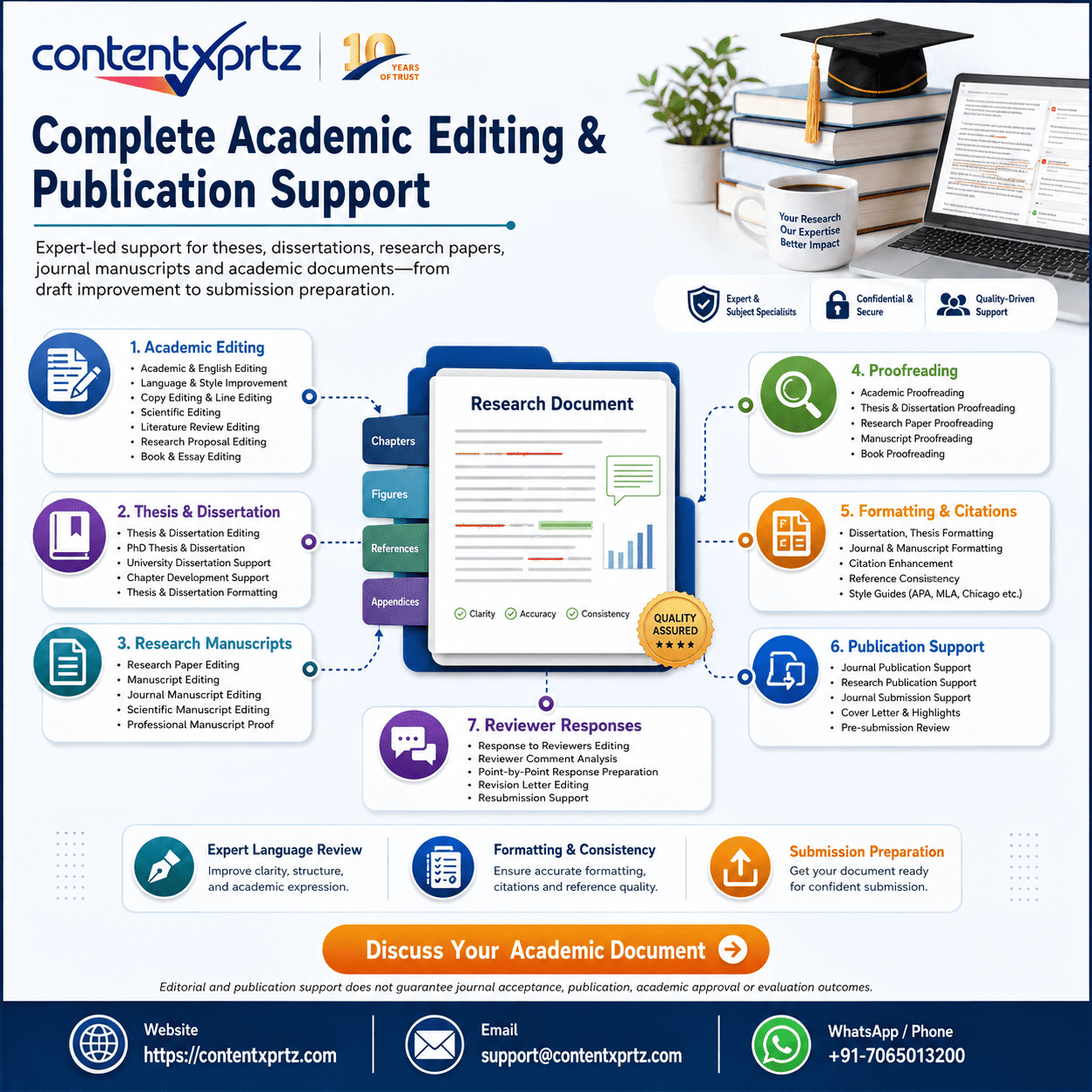
If your draft is complete and you want a careful language, structure, and publication-readiness review, Contentxprtz offers research paper editing service aligned with the manuscript and target-author instructions you provide.
“At Contentxprtz, we don’t just edit; we help ideas reach their fullest potential.”